
Open Banking links a casino deposit request to your bank, while payment costs, bonus terms and withdrawal times can vary.
How Open Banking Fits Into an Online Casino Cashier
When I see a bank option in a casino cashier, I don’t assume it means the same thing as typing in bank details for a traditional transfer. Open Banking can let a payment service connect the casino’s deposit request with your bank, so you approve the payment through your bank rather than entering card details. The exact screens depend on the service and the bank, but the basic idea is a bank-account payment initiated from the cashier.
The flow tends to start after you have signed in and opened the deposit area. You choose the bank-based option, enter the amount the cashier asks for, then follow the payment provider’s instructions. That may involve selecting your bank and confirming the payment through its own app or online banking. When the authorisation is complete, you return to the casino cashier, where the deposit status should be shown.
That hand-off is the part I pay attention to. You are moving between the casino, a payment service and your bank, and a payment can feel less straightforward if you lose track of which screen is asking you to act. I check that I am responding to the bank’s own authorisation process and that the amount I am approving matches the one I entered. If anything looks different, I stop rather than treating a familiar logo as proof that the request is right.
When choosing a UK casino for direct banking, you may want to consider how long payouts are stated to take. Use this list as a reference for the payout-speed information available for each option.
1. Chanze
Payout speed: 1-3 business days Chanze has a stated payout speed of 1–3 business days, giving you a timing detail to consider.
2. EvoSpin
Payout speed: 1-3 business days EvoSpin lists a payout speed of 1–3 business days, which you can factor into your choice.
3. Zombillion
Payout speed: 1-3 business days Zombillion’s stated payout speed is 1–3 business days, offering you a specific timing point to note.
4. SpinFormula
Payout speed: 1-3 business days SpinFormula has a listed payout speed of 1–3 business days for you to consider.
5. Amunbet
Payout speed: 1-3 business days Amunbet states a payout speed of 1–3 business days, providing you with a clear timing detail.
6. x3bet
Payout speed: 1-3 business days x3bet lists payouts as taking 1–3 business days, a useful detail for your review.
7. Revery Play
Payout speed: 1-3 business days Revery Play has a stated payout speed of 1–3 business days, which may help inform your choice.
8. WinBeast
Payout speed: 1-3 business days WinBeast lists a payout speed of 1–3 business days, giving you one concrete detail to weigh.
9. SlotoSport
Payout speed: 1-3 business days SlotoSport’s stated payout speed is 1–3 business days, which you can keep in mind.
10. NightWin
Payout speed: 1-3 business days NightWin has a listed payout speed of 1–3 business days for you to consider.
Some cashiers may present an Open Banking service by its own name; others may use a broader label such as bank payment or pay by bank. A bank transfer can also appear as a separate option. These routes are related because they move money from a bank account, but they are not necessarily the same checkout process. A conventional transfer may ask you to arrange payment through your banking service using details supplied by the recipient. An Open Banking payment is generally initiated through a connected payment flow, with the bank asked to authenticate and approve it.
The label alone doesn’t tell you every detail. The cashier is the useful place to see what is available to your account at that moment and what steps the payment requires. If you pick a route and then find that your bank is not offered, the payment cannot be authorised, or the cashier does not return to a clear status, don’t keep repeating the attempt blindly. Check the casino’s transaction record and your bank account before trying again. You want to avoid turning uncertainty about one payment into confusion about several.
TRON TRX Casino Comparison UK: Licensing and Payments
I also separate the bank’s role from the casino’s role. Your bank authenticates or approves the payment in its own environment; the casino records the deposit against your gambling account. A completed bank authorisation and a visible casino balance are not necessarily the same screen or event, so allow the cashier to update and check the transaction history if the balance does not change straight away. That is not a promise that every payment will follow one pattern. It is simply a sensible way to keep track of what you have actually authorised.
There is a practical reason to use a bank account and payment route that match the details on your casino account. When the account information and payment belong to the same customer, basic ownership details are less likely to create avoidable friction. I would rather keep that part boring: my own account, my own bank authorisation, and a deposit made from the account I intend to use. It gives the transaction a clearer trail.
Specialist casino-payment reviews describe Open Banking and bank transfers as routes that can support instant deposits and fast withdrawals at many sites. Treat that as a description of what some sites may offer, not a guarantee for a particular cashier or transaction. The deposit experience depends on the route actually shown to you and whether the bank authorisation goes through. “Instant” sounds tidy. The screens still matter.
Do
- Verify the route in the cashier after signing in
- Match the payment account name to your casino account
- Check the transaction record and bank account before retrying
Don’t
- Rely on general payment logos on the homepage
- Repeat payment attempts blindly if the status is unclear
- Treat a familiar logo as absolute proof the request is correct
If you are trying to understand whether a casino supports Open Banking, look at the deposit options after signing in rather than relying only on a general payment logo elsewhere on the site. The cashier is where the route becomes actionable: it shows whether you can select it, what bank connection is involved and what authorisation is required. I wouldn’t treat the words “bank payment” as enough to know which process you will get.
For a first deposit, take the time to follow each step rather than rushing through a payment flow you have not used before. Keep the casino cashier open until it reports a result, and make sure you can find the transaction in the account history. If the bank confirms an authorisation but the casino does not show a completed deposit, use the transaction details when contacting the casino or payment provider instead of sending another payment on guesswork. A clear record beats a second attempt.
Open Banking Is a Payment Route, Not a Casino Feature
When I see a casino described as “Open Banking”, I take that as shorthand, not as a special kind of gambling site. The useful question is whether its cashier offers a bank-based way to pay. Open Banking belongs to the payment side of the relationship; it does not change what the casino is, what games it offers or how your account is managed.
That distinction sounds obvious until the wording gets slippery. A site can put “Open Banking” beside its name in a review, but the label alone does not tell you what you will find after signing in. The cashier is where the claim matters: it should show a route that connects the payment to your bank account. If it does not, the phrase is just decoration.
Casinos That Accept Dogecoin in the UK
I used to read payment labels as if they were endorsements. They are not. A casino may support one bank-based service and not another, or make a route available only in particular circumstances. So “this is an Open Banking casino” is less useful than “this cashier currently offers a bank-based payment option I can use”. The second statement is narrower, but it gives you something concrete to verify.
The label does not describe the casino
There is no separate class of casino that becomes more trustworthy, easier to use or better suited to you just because Open Banking appears in its payment information. It is a way to describe how money may move between a customer’s bank and a gambling account. The operator, account terms and payment options remain separate questions.
That matters because casino pages often bundle unrelated selling points together. A payment badge can sit alongside claims about games, welcome offers or a smooth account experience, making the whole package feel like one feature. It is not. The bank-based route tells you something about the cashier, not whether the rest of the offer is worthwhile.
I would also keep the operator’s identity separate from the payment provider’s identity. Seeing a familiar payment name does not mean that provider runs the casino or takes responsibility for the casino’s account decisions. The operator and the payment route have different roles. If you need to understand a casino rule, read the operator’s terms; if you need to know which bank-based option is actually available, inspect the cashier information.
An Open Banking label describes a payment route in the cashier; it does not change the casino’s games, account management, or overall trustworthiness.
That is a less exciting answer than a glossy badge. It is also clearer.
“Open Banking” can be a broad description
People use the phrase to mean a bank-linked payment experience, but it can be applied loosely in promotional writing. A page might use it as a category label without telling you precisely which route is available. Another might describe a bank transfer in broad terms. Those phrases can sound interchangeable while still leaving practical details unresolved.
For me, the important distinction is not the wording on a banner. It is whether the route shown is genuinely bank-based and whether it is offered for the transaction I intend to make. A general statement on an information page can be out of date or incomplete; the cashier is more relevant to what the account offers at that moment.
This is not a reason to treat every description as misleading. It is a reason to read it as a description, not a guarantee. A payment method can be part of a casino’s available options without being available to every customer in every situation. The label alone cannot settle that.
Nor does the phrase tell you what will happen after a payment has been made. It does not, by itself, promise a particular account experience or establish how a later transaction will be handled. I learned to stop turning a short payment label into a whole story about the operator. One route, one function. Keep it there.
Casinos That Accept Litecoin in the UK: What to Check
Think in terms of the cashier
If you are comparing casinos with Open Banking, compare the payment route rather than treating the phrase as a feature score. Is the bank-based option actually listed? Does the wording describe the route clearly, or merely repeat a broad label? Does the account information match what the cashier presents? Those are more useful questions than whether the site calls itself an Open Banking casino.
There is a practical reason to keep the route and the account connected in your thinking. The cleanest arrangement is often to use one named account consistently for deposits and withdrawals. Switching between names or accounts can make an otherwise straightforward transaction harder to explain. That does not make one payment label inherently better; it makes consistency sensible.
I would not assume that a casino’s use of the term means every bank is supported, or that the option will appear in every account. Check what is actually presented to you rather than relying on a generic description copied across a page. And do not confuse a bank-based option with the operator’s own features: it is one route through the cashier, not a badge of quality.
So when someone says “Open Banking casino”, I translate it into a smaller, more useful claim: this is a casino whose cashier may offer a bank-linked way to pay. Then I check that claim where it counts. No magic in the label. Just a route to verify.
Instant Deposits, Bonus Terms and the Catch
An instant deposit sounds like the neat bit: choose a bank-based option, approve the payment through your bank, and see the balance appear without waiting for a card transaction to work its way through. Open Banking and bank transfers can provide instant deposits at many sites, according to a specialist casino review. That is a report about what some cashiers can do, not a promise that every transfer will land immediately.
The distinction matters when you are trying to start playing straight away. The cashier may show a bank payment route, but the timing can still depend on the service offered, the bank authorisation and the operator’s handling of the transaction. “Instant” describes the hoped-for result; it does not make every part of the process identical across casinos. If the payment is pending, another deposit is not a clever shortcut. It can leave you sorting out two transactions instead of one.
I’ve learned not to treat a payment label like a guarantee. Check the cashier’s instructions before approving anything, and wait for the balance to update before trying again. Boring, but cheaper than confusion.
Bonuses bring a separate catch. A successful deposit does not automatically qualify for a welcome offer, free spins or another promotion. The promotion’s terms decide which payment methods count, and an offer can exclude particular routes. That means an Open Banking deposit may be accepted by the casino while still failing the promotion’s eligibility rules. Payment acceptance and bonus eligibility are two different checks.
Casinos That Accept Wirecard in the UK: What to Check
Before you opt in, look for the payment-method wording in the offer terms. Check whether the bank route you intend to use is included, whether you need to activate the promotion first, and whether the offer applies to deposits made through that cashier option. Do not assume that “new customer” or “first deposit” means every way of paying is covered. If the terms are unclear, ask the casino before depositing rather than relying on a banner or a button beside the cashier.
The same applies when you are drawn in by wording such as “no deposit bonus” or “free spins”. Those labels describe the promotion, not a promise that a particular payment route will unlock it. A no-deposit offer may not require a deposit at all; free spins may have their own eligibility conditions. Read what the offer actually requires, and do not make a deposit just to chase a benefit whose rules you have not checked.
Payment speed can also make a promotion feel more urgent than it is. A quick confirmation is not a reason to skip the terms. I’ve made that mistake: I saw the money arrive, assumed the offer would follow, and only then checked the conditions. The payment had worked. My assumption had not.
A specialist casino review reports that PayPal is valued for speed and convenience, while noting that it may be excluded from bonus eligibility. That is a reminder that a familiar or quick method can still be treated differently under an offer. It is not a rule you can safely apply to every casino or every promotion; check the specific terms shown by the operator.
Attention A successful bank deposit does not guarantee bonus eligibility; check the promotion’s specific payment-method terms first.
So, if you want to use direct banking for a casino deposit, separate the decision into two parts: will the cashier accept this payment, and does the promotion accept it too? A fast deposit can be useful, but it does not turn a payment route into a bonus qualification. Read the small print first. Then pay.
Compare the Real Cost Before You Deposit
When I compare direct banking casino sites, I don’t start with a label like “free”. I look at what the same deposit would actually cost through each route. A payment can have no obvious charge and still be more expensive once the exchange rate or a bank fee is factored in.
A specialist payment review identifies several possible charges: the casino’s own fee, a payment-provider charge, fees from your bank or card issuer, currency conversion and network costs. Not every transaction attracts all of them, and the amount can depend on the route and the account involved. So there is no single payment method I’d call the cheapest for everyone.
Look beyond the visible fee
Start with the amount you intend to send and check what each service says you will pay. Look for a stated charge from the casino and any fee shown by the payment provider. Then check your bank’s terms as well; a casino cashier cannot tell you every charge your bank might apply.
UK Casino Sites That Accept Debit Cards: What to Check
Currency deserves a separate look. Confirm the casino account’s currency and the currency in which your bank account or payment service will process the transaction. If they differ, conversion may happen somewhere along the way. The rate may include a spread: the difference between the rate used for the transaction and a reference market rate. A specialist review notes that this spread can outweigh a visible flat fee. “No fee” can still cost you.
I once paid attention to the line that was easiest to spot and ignored the exchange rate. That was the wrong comparison. The useful figure is the total taken from your side for the amount that reaches the casino, not one fee in isolation.
Compare like with like
For a fair check, use the same intended deposit amount and currency for each route. Write down any casino charge, provider charge, bank or issuer fee, conversion rate and network cost that applies. If a fee is a percentage or the exchange rate is unclear, check the provider’s terms or ask its support team rather than guessing.
Then compare the total debit from your account. If one route shows the amount in pounds while another quotes a different currency, don’t treat those displayed figures as directly comparable. Work out what each would take from your account, including conversion. A route with a small fixed charge might come out cheaper for one transaction, while a route with no visible charge could be worse after conversion. It depends on the actual amount and the terms in force.
Keep a record of what the cashier displays before confirming. That gives you something concrete to compare with the amount later shown by your bank or payment service. If the total is unclear, pause rather than assuming the missing detail means there is no cost. Not worth guessing.
Comparing Payment Costs
Identify visible fees
Note the stated charges from the casino and the payment provider for the intended deposit amount.
Check bank and conversion rates
Review your bank’s terms and the currency exchange spread to see the total amount debited from your account.
Compare total debits
Compare the final amount taken from your side for each route to determine the actual cheapest option.
The “best” direct banking option, then, is not a permanent ranking of payment brands. It is the route whose full cost makes sense for your transaction, in your account currency, under the fees and rates currently shown. Compare those pieces first; the cheapest-looking button is not necessarily the cheapest way to pay.
What to Check Before Choosing a Casino Payment Route
A payment logo on a casino’s homepage is a lead, not proof that you can use that method. I’ve learned to check the cashier itself before treating a route as available: sign in, open the deposit options and see what is offered for your account and location. The list can differ from a general payments page, and a method shown in a review may no longer be enabled.
For bank-based payments, look for the actual route described in the cashier rather than relying on a broad label such as “direct banking”. Check whether your bank appears among the supported choices and whether the route works with your account. If it is missing, or the cashier shows a different method from the one you expected, do not assume the payment will go through. Check the operator’s payment information or ask support before depositing.
Check the card and currency details
Specialist casino reviews may list Visa or Mastercard, but that does not establish that every card product is accepted in the UK. Confirm the current options in the cashier and check that your card is a debit card. UK-licensed casinos cannot accept credit-card payments for gambling, including credit-card funding routed through a money service business.
UK Casinos That Accept Bitcoin: What to Verify
Currency deserves a separate look. Some casino payment pages state that pounds sterling are supported, but confirm the account currency before your first transaction. If the account is set to another currency, a conversion may be involved even when the payment method itself is available. I once focused on the logo and missed the account setting. Easy mistake.
Read the conditions beside the method
Check whether the displayed route is available for deposits, and read any payment-specific notes before confirming. A payment option can have conditions attached to its use, so do not rely on a general statement that a casino accepts bank payments. The details on the live cashier are more useful than a broad claim on a landing page.
Keep an eye out for wording that distinguishes between payment types or account eligibility. With cards, for instance, a general Visa or Mastercard listing does not tell you whether your particular debit card will work. If the cashier’s wording is unclear, pause and ask the operator rather than testing it with money.
Verify the operator, not just the payment button
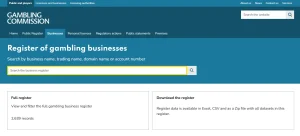
A familiar bank or card logo does not tell you whether the casino is authorised to serve customers in Great Britain. Before depositing, check the operator’s licence number on the UK Gambling Commission’s public register. UK-licensed casinos must also provide account-level financial limit controls, so you should be able to find those in your account.
Payment Route Verification
- Confirm the route is available in the live cashier
- Verify the account currency matches your expectations
- Ensure you are using a debit card (no credit cards)
- Check the operator’s licence on the UK Gambling Commission register
- Locate the account-level financial limit controls
My simple check is this: confirm the route in the cashier, confirm the currency and card type, then verify the operator. If any detail is vague, get clarification before sending money. A tidy payment page is not the same thing as a suitable route.
UK Direct Banking: Limits and the First Deposit
When I first looked at a casino cashier, I treated its minimum deposit as a sensible amount to budget around. That was my mistake: the minimum tells you what the cashier will accept, not what you can comfortably afford to lose. With a UK direct banking casino, check both the payment route’s limits and the financial limit on your gambling account before moving money.
Some specialist casino reviews describe minimum deposits in the £10–£20 range, but that is not a fixed rule for every site or payment method. The amount shown in the cashier is the one that matters for the transaction you are making. A direct bank payment could have a different minimum from another route at the same casino, and the available options can differ between operators. Don’t assume that a figure you saw in a review applies to your account.
The maximum is not necessarily one simple figure either. Specialist reviews note that deposit ceilings can be set per transaction, per day or per month, and can depend on the payment method and account status. In practice, look at the limit displayed for the chosen route and your account rather than planning around a number mentioned elsewhere. If the cashier will not accept the amount you intended to deposit, stop and reassess your budget; switching routes just to get money through can make it easier to lose track of what you are spending.
Casino Sites That Accept Jeton in the UK: What to Check
There is a separate control that matters before you make that first deposit. UK Gambling Commission rules require remote gambling licensees to ask new customers to set a financial limit before they deposit, and to make account-level limit controls accessible. This is not the same as a payment method’s minimum or maximum. The cashier may say what it can process; your account limit is a way to put a boundary around your own spending.
I used to think setting a limit could wait until I had a better feel for a site. That put the decision off until I was already focused on playing. Setting it before depositing is a more useful moment: you can decide what you can afford without treating the payment screen as a prompt to add more. Keep the amount realistic for your finances, not for a bonus or a minimum shown by the cashier. The control is there to support your decision, not to tell you what you can afford.
For a casino with direct banking in the UK, make these checks separately: what is the minimum for the specific payment route, what maximum applies to your transaction or account, and what financial limit have you set? Those figures answer different questions. A payment can fit within the cashier’s rules and still exceed the amount you meant to spend. If you need to change your account limit, use the account controls and read how they work before relying on a change.
Financial Limits
Do not confuse a payment method’s minimum deposit with your own affordable budget; always set a personal financial limit before depositing.
Small distinction. Big difference.
Which Casino Payment Methods Can You Use?
A casino cashier can offer several ways to fund an account, but the labels do not tell you everything. I’ve learned to check what each route actually does before choosing it: a method may be deposit-only, unavailable to your account, or treated differently under the promotion’s terms.
Debit cards are a familiar option. UK casinos commonly accept Visa and Mastercard debit cards. Credit-card payments for gambling are not permitted at UK-licensed casinos, so don’t assume a card route means every card product is eligible. Check the cashier and your card type.
Bank-based payments may appear as Open Banking or a bank transfer. These are ways to move money through your bank rather than through a prepaid voucher or e-wallet. A specialist casino review describes Open Banking and bank transfers as supporting instant deposits at many sites, but that is not a promise about every cashier. The available route depends on the casino and what it presents to you.
Prepaid vouchers work differently. Paysafecard is deposit-only, so it is not a complete route for moving money both into and out of an account. That distinction is easy to miss when a payment logo is shown without explaining what it can be used for.
Casinos That Accept Diners Club in the UK
E-wallets such as Skrill and Neteller are listed at some sites. A specialist casino review also notes that they may be excluded from promotions; terms can change, so read the offer conditions before depositing. PayPal is another option discussed in casino payment coverage, but a specialist review reports that it may not qualify for bonuses either. Don’t treat any of these as a fixed rule across operators.
That’s the useful comparison: cards, bank-based payments, vouchers and wallets are not interchangeable. One may suit a deposit, while another may not support the full transaction you have in mind. Availability and promotion eligibility can differ by cashier and by offer.
I used to choose by recognising a logo. Not enough. Check the payment method’s role and the relevant terms before you commit.
Why a Fast Deposit Can Still Mean a Slow Withdrawal
A direct banking deposit can appear in your casino balance quickly, but that only describes the money going in. Getting a withdrawal approved and delivered is a separate process. I used to treat “instant” as if it applied both ways. It doesn’t.
A withdrawal request may first sit with the casino while its team checks the account and approves the payment. Specialist reviews identify internal processing and completed verification as factors in payout speed; the operator’s own procedures matter too. A first withdrawal can take longer if KYC checks still need to be completed. That is not the bank holding up a payment that has already been sent. It may not have been sent yet.
Withdrawal speed is separate from deposit speed; it depends on the operator’s internal processing, KYC verification, and banking cut-off times.
There’s another constraint: UK anti-money laundering rules generally mean winnings are returned to the original payment source. So even if you deposited through an Open Banking route, you should not assume you can choose any payout destination. Closed-loop rules can also mean that an alternative route needs extra checks before funds are released.
Once the casino approves a bank transfer, delivery still depends on the banking side. Specialist payment guidance points to factors such as cut-off times, weekends and currency conversion. An “instant withdrawal” label may describe only one stage of the journey, not the full time from pressing the button to seeing cleared funds in your account.
I check the cashier’s withdrawal terms separately from its deposit claims: the available payout route, any stated processing stages and whether verification is outstanding. If the account is already verified, that removes one possible hold-up, but it does not guarantee a particular arrival time. A quick deposit is no promise of a quick payout.
Different direction. Different clock.
Casinos That Accept eChecks in the UK: What to Check
Direct Banking and GamStop Are Separate Questions
A direct bank payment tells you how money moves between your account and a casino. It does not tell you whether the casino is part of GamStop. Those are separate checks, even when a site is described as an instant banking casino.
I’d treat claims about a non-GamStop casino as a question about the operator’s account-level safeguards, not its cashier. A bank route cannot confirm whether self-exclusion applies, and the payment method alone says nothing about how the casino handles a request to stop gambling. Don’t let a familiar payment option stand in for checking the site’s status.
There are also safeguards that apply to remote gambling operators in Great Britain. Before a new customer can make a first deposit, the operator must ask them to set a financial limit. Customers must also be able to find and use account-level limit controls. These tools are about managing an account; they are not proof that a casino is or is not connected to GamStop.
Casinos That Accept Debit Cards in the UK
I’ve made the mistake of treating a smooth cashier as a sign that everything else was in order. It isn’t. Check the self-exclusion position separately, then look at the account controls available to you. Payment choice and protection are different questions. Don’t mix them up.
Keep Deposits and Withdrawals in Your Own Name
When I first started paying attention to casino banking, I treated the cashier like a simple checkout: choose a method, send the money, move on. I didn’t think much about whether the account details matched. That was the bit I should have checked.
Use a casino account in your own name and, where possible, a payment account that belongs to you too. If you deposit through direct banking, make sure the bank account is yours and that the details you entered at the casino are consistent. A mismatch can invite extra questions about who owns the funds. It is avoidable hassle, not a clever workaround.
UK casino sites that accept EcoPayz: cashier checks
The cleanest arrangement is often one named account used consistently for deposits and withdrawals. That does not promise that every transaction will pass without checks, but it gives the casino fewer basic ownership details to untangle. If you change payment routes, check what the cashier permits and whether the alternative is in your name before sending anything.
I’ve learned not to use someone else’s card or bank account just because it is nearby or seems easier. A friend’s payment method may appear to solve a small problem at the deposit stage, then create a bigger one when the casino checks the transaction. Keep the account and payment route aligned.
Simple, not flashy. That is the point. A direct-banking casino is still handling real payments, so treat the name on your casino account and the name on your bank account as part of the same transaction. Consistency is a small precaution that can spare you unnecessary ownership questions.
Why can a fast payout casino still delay my withdrawal?
A fast payment method does not bypass the casino’s internal approval process. A first withdrawal may take longer while verification is completed, and an unverified account can also slow processing.
Why must withdrawals return to the deposit method?
Returning funds to the original payment source is a common anti-fraud and anti-money-laundering control. Using a different route may require additional verification.
What is the fastest withdrawal method for UK casinos?
PayPal, Open Banking services and debit cards linked to fast payout systems are generally among the quickest. The casino’s approval process and your verification status also affect how soon you receive the money.
Are fast casino withdrawals guaranteed?
No. Withdrawal speed depends on the casino’s approval process and whether your account is fully verified.
Do UK casino withdrawals require verification?
Verification may be needed, particularly for a first withdrawal. Completing it can help avoid delays in the casino’s approval process.
Which payment methods are accepted in Great Britain?
Common options include Visa and Mastercard debit cards, PayPal, Open Banking and bank transfers. Some sites also offer Apple Pay, Skrill, Neteller or Paysafecard, which is for deposits only; check the cashier for the options available to you.
What is the current minimum deposit?
Minimum deposits usually start at £10–£20, depending on the payment method.
Material created by the team Prestige