

UK rules prohibit licensed online casinos from accepting credit-card payments for gambling, so familiar card logos do not guarantee a usable deposit option.
Can You Use a Credit Card to Gamble Online in the UK?
No. A UK-licensed online casino cannot accept credit-card payments for gambling. That means you cannot deposit with a credit card and use the money to play casino games or slots. The answer is the same whether you call it a casino deposit, an online gambling payment or a card payment for a spin.
I used to read payment logos as a simple promise: if a card brand appeared on a page, surely my card would work. That is not a safe assumption for credit cards in the UK. The rule is about the kind of payment being made, not whether the card is Visa or Mastercard, or whether the cashier makes the option look familiar.
The regulator’s ban took effect on 14 April 2020, and it has not been relaxed. Since then, remote gambling licensees have not been allowed to accept credit-card payments for gambling. So if you are asking whether you can use a credit card at a UK-licensed online casino, the practical answer is no. It is not a matter of finding the right button or trying a different game.
That also covers slots. A credit card cannot be used to fund play on online slots at a UK-licensed casino. The same rule applies to other gambling products offered by the operator. Changing from a table game to a slot, or depositing through a different part of the site, does not turn the payment into something permitted.
There is an important point about wallets, too. A payment does not become acceptable just because a wallet sits between the card and the casino. UK rules also prevent operators from accepting wallet payments where the wallet allows credit-card funds to be used for gambling. In other words, routing the payment through another service is not a legitimate workaround.
Keep the distinction clear: this is about credit cards being used for gambling, not every card that looks similar. A credit card and a debit card are different products, even when they carry the same network logo. I have learned not to treat the logo as the deciding detail. The payment type matters.
Casino Sites That Accept Jeton in the UK: What to Check
If a cashier or payment page seems to suggest otherwise, do not take that appearance as permission to gamble with credit. The rule for UK-licensed casinos remains in force. A payment method being familiar, or a card being accepted for ordinary online shopping, does not make it available for a gambling deposit.
It is also worth keeping the licence context in mind. Online gambling is legal in the UK at sites licensed and regulated for the market, and those operators must follow the credit-card restriction. A site’s wording cannot override that requirement. If your question is simply whether you can deposit at a UK-licensed online casino with a credit card, there is no permitted credit-card route for that gambling transaction.
I know that a flat “no” is less satisfying than a clever workaround. But on this point, looking for a loophole is likely to waste your time. The ban applies to credit-card payments for gambling, including attempts to route credit-card funds through a money service or an eligible wallet. No workaround.
So, for online casino play in the UK, including slots, do not plan on using a credit card. The rule has applied since 14 April 2020 and remains in place. That is the answer, even if a payment page makes the situation look less clear than it is.
Why a Casino Search Result May Still Mention Credit Cards
A casino page can show Visa or Mastercard beside its payment options and still not tell you whether your particular card can be used for a deposit in the UK. The logo identifies a card network, not necessarily the kind of card accepted, the payment route available to UK customers, or the rules applied to a specific account.
I used to treat the logo as the answer. It isn’t. A specialist review may list Visa and Mastercard, but that should be read as a prompt to check the operator’s cashier, not as confirmation that every card product is eligible. Payment pages can be general, outdated or written for customers in different markets. The cashier is where you can see the options actually presented for your account and location.
Attention: A card network logo (like Visa or Mastercard) does not guarantee that a credit card is accepted; it may only indicate that debit cards are permitted.
What the card logo does—and doesn’t—tell you
Visa and Mastercard are used for different card products, including debit cards and credit cards. Seeing either name on a page does not establish which product the operator accepts. Nor does it tell you whether the payment option is currently available to UK customers.
That distinction matters when a page says “cards accepted” without explaining further. It may be describing debit-card payments, or it may be presenting a broad list of methods that does not match the UK cashier. The wording can sound definite while leaving the key detail unresolved.
So look for the payment method inside the casino account, rather than relying on a logo or a sentence on a promotional page. If the cashier offers a card option, check the instructions and the card type it allows before entering payment details. If the information is unclear, ask the operator to confirm it. Don’t assume that a familiar network name answers the product-eligibility question.
Check the UK cashier, not just the page
A practical check is simple: sign in, open the deposit area and review the methods displayed for your account. Read any notes attached to the card option, and make sure the page is for UK customers. If Visa or Mastercard appears without enough detail to distinguish card products, contact customer support rather than testing the payment blindly.
UK casino sites that accept EcoPayz: cashier checks
The same caution applies when a review page describes a casino as accepting cards. That wording may be accurate for one payment type or market and still be unhelpful for your situation. I now treat a general payment list as a starting point, not a promise. Small distinction. Big difference.
Do not try to route a card payment through another service just because the casino page displays a card logo. The relevant question is what the cashier permits for your account and what product the operator’s instructions cover. A payment option shown elsewhere does not settle either point.
Read vague claims carefully
Phrases such as “Visa accepted” can leave out the detail you need. Does the statement refer to a debit card? Is the method currently shown to UK customers? Does the cashier identify the eligible card product? If those answers are missing, the claim is not enough to make a decision.
A clear operator response should address the actual card product and the UK payment route, rather than repeating that Visa or Mastercard is supported in general. Keep that response and follow the cashier’s instructions. If the information conflicts, pause instead of guessing.
The useful takeaway is not that every card listing is wrong. It is that a network logo alone cannot confirm what you can use. Check the UK cashier, confirm the card product, and treat broad claims as incomplete until those details line up.
What “Best” Means When Credit Cards Aren’t an Option
If you’re looking for a UK casino that accepts credit cards, check the site’s current payment options before signing up, as availability can vary. The payout details below give you one point to consider when reviewing each entry.
1. Chanze
Payout speed: 1-3 business days Chanze has a listed payout speed of 1–3 business days. You can use this as a reference when considering its payout timing.
2. EvoSpin
Payout speed: 1-3 business days EvoSpin has a listed payout speed of 1–3 business days. You can use this as a reference when considering its payout timing.
3. Zombillion
Payout speed: 1-3 business days Zombillion has a listed payout speed of 1–3 business days. You can use this as a reference when considering its payout timing.
4. SpinFormula
Payout speed: 1-3 business days SpinFormula has a listed payout speed of 1–3 business days. You can use this as a reference when considering its payout timing.
5. Amunbet
Payout speed: 1-3 business days Amunbet has a listed payout speed of 1–3 business days. You can use this as a reference when considering its payout timing.
6. x3bet
Payout speed: 1-3 business days x3bet has a listed payout speed of 1–3 business days. You can use this as a reference when considering its payout timing.
7. Revery Play
Payout speed: 1-3 business days Revery Play has a listed payout speed of 1–3 business days. You can use this as a reference when considering its payout timing.
8. WinBeast
Payout speed: 1-3 business days WinBeast has a listed payout speed of 1–3 business days. You can use this as a reference when considering its payout timing.
9. SlotoSport
Payout speed: 1-3 business days SlotoSport has a listed payout speed of 1–3 business days. You can use this as a reference when considering its payout timing.
10. NightWin
Payout speed: 1-3 business days NightWin has a listed payout speed of 1–3 business days. You can use this as a reference when considering its payout timing.
The phrase “best credit card casino” sounds as if the card is the thing that makes a casino worth choosing. For a UK player, that is the wrong starting point. I’d judge the payment setup by whether it gives me a straightforward route into the account and back out again—not by whether a page has put “credit card” in a headline.
That changes the question from “Which casino takes my card?” to “Which payment route can I use consistently at a casino?” A payment method shown on a page is not enough on its own. What matters is the route available to you in the account, and whether you can use the same named account for both depositing and withdrawing.
That last part is easy to overlook when you are eager to get started. I would check the deposit and withdrawal information together before choosing a route. If you deposit from one account and later try to withdraw to another, you may create avoidable friction over whose funds or account details are involved. Using one named account consistently is often the cleanest approach.
Do
- Use one named account for both deposits and withdrawals
- Confirm the payment route is available in your account
- Match account names with payment method details
Don’t
- Rely on a “best” label or promotional headline
- Use a payment method that doesn’t align with withdrawal routes
- Assume a familiar brand works the same for every account
Not glamorous. Just practical.
When I see a payment method described as “easy,” I want to know what that means for the whole transaction, not just the first click. A deposit option may look suitable, but if the withdrawal route does not line up with it, the choice may be less tidy than it first appeared. The useful comparison is not a list of logos; it is whether the route works for the purpose you have in mind.
Before settling on a casino, I’d look for clear payment information and make sure the method you intend to use is actually available in your account. Then I’d check that the account name matches the one attached to that payment method. Those simple checks tell you more than a bold claim about being “the best.”
There is no need to turn this into a hunt for a perfect label. A casino can call itself a top choice, but that does not tell you whether its payment setup fits your circumstances. The more useful standard is modest: a route you can use, understand and keep consistent from deposit through withdrawal.
Casinos That Accept eChecks in the UK: What to Check
I would also avoid treating a familiar payment brand as proof that every account can use it in the same way. The practical details belong to the specific cashier and account, so check there rather than assuming the headline tells the whole story. That is not a complicated test. It is just a better one.
So if you arrived looking for a credit-card casino, keep the useful part of that search—the wish for a payment method that feels manageable—and drop the card requirement. Focus on a named account you can use consistently, and confirm that the same route is accepted for deposits and withdrawals. That is a more reliable way to decide whether the payment arrangement suits you than any “best” badge on a page.
Deposits Are Quick; Withdrawals Can Be a Different Story
A payment can look effortless on the way in and still take patience on the way out. That gap catches people because the deposit screen and the withdrawal process are not two versions of the same transaction. One authorisation may put money into your casino balance promptly; a payout has to pass through checks and processing before it reaches your account.
Deposit and withdrawal processes are different; an instant deposit does not guarantee a fast payout, as the latter must pass through checks and processing.
A specialist payment review describes card deposits as potentially instant, while a withdrawal can take several business days. Treat that as a possible timeline, not a promise for every casino or every transaction. For a UK-licensed casino, a card deposit means an eligible debit card: credit-card payments for gambling are not an available route. The cashier’s displayed estimate is more useful than a broad claim on a promotional page.
The first thing I now check is what the casino means by “withdrawal time”. It may refer to the casino approving the request, or to the full period until the funds arrive. Those are different stages. A request can sit in the operator’s queue before it is released; after that, the payment provider and receiving account can affect when it appears. So an instant deposit does not tell you much about the time needed to get a payout.
Why the first payout may take longer
A specialist review notes that first withdrawals can take longer while verification is completed. That can mean the casino asks for identity or account documents before it approves the payment. If the request arrives before your account checks are finished, the withdrawal process may pause while those details are reviewed.
I used to treat a pending status as a sign that something had gone wrong. It may simply mean the casino has not completed its checks. Still, do not assume: read the account message and contact support if the status or requested documents are unclear. Sending the right information through the casino’s stated process is more useful than repeatedly submitting the same withdrawal request.
Casinos That Accept Wirecard in the UK: What to Check
KYC is worth getting out of the way before you need your balance. Make sure the account details are accurate, and keep an eye on messages asking for verification. A withdrawal request can be approved only after the operator has completed the checks it requires. First payout: more steps.
Follow the request, not just the clock
When you request a payout, note its status and any stated processing estimate. If the casino says it is still reviewing the request, the payment has not necessarily been sent. If it says the payment has been released, check with the relevant payment provider or account before assuming the casino still has it.
A delay does not automatically mean a dispute, but it is reasonable to ask for a clear explanation when the stated processing period has passed. Keep the request details and any replies together. If the issue remains unresolved, a UKGC-licensed casino must provide an internal complaints process and access to an approved Alternative Dispute Resolution service.
The practical lesson is plain: judge the payment journey by both ends. Check how quickly a deposit is credited, then look separately at withdrawal approval, verification and delivery. “Fast deposits” describes only the first half. A payout has its own clock.
The UK Credit Card Gambling Ban: What It Changes
The credit card gambling ban changed more than the button you see in a casino cashier. It affects the route money can take into a gambling account. Since 14 April 2020, the rule has not been relaxed, and it covers attempts to disguise credit-card funding by passing it through a money service business. A wallet cannot be used as a workaround where it lets credit-card funds reach gambling.
UK Credit Ban
UK-licensed casinos cannot accept credit-card payments for gambling, and using wallets or money services as workarounds is prohibited.
That matters because payment labels can make a route look more straightforward than it is. A card, bank account or e-wallet is not just a way to move money; the operator needs to know where the funds came from and who controls the payment account. If the underlying source is credit, changing the number of steps in the transfer does not change the nature of the funding.
I used to think of a cashier as a menu: pick whichever option is quickest, then worry about the details later. That can create friction. The name and ownership details on your casino account and payment method should belong to you. A mismatch, or a route that needs more checks, can leave a transaction waiting while the operator establishes who is paying and where the money originated.
The same logic carries through to withdrawals. Anti-fraud and anti-money-laundering controls commonly require funds to go back to the original payment source. This is often called a closed-loop approach: the casino does not treat every withdrawal destination as interchangeable with every deposit route. If a payment method cannot receive a payout, or the operator cannot confirm the source, it may need to verify another route before releasing funds.
That is why a deposit can appear to go through without telling you everything about the later payout. A different withdrawal route may call for additional verification, and an operator may need to confirm account ownership or request information about the payment source. It is not necessarily a sign that anything has gone wrong; it is part of tracing the funds and applying the relevant controls. Still, it is better to understand the route before putting money in.
Casinos That Accept Citadel in the UK
In practice, the ban makes the source of funds part of the payment decision. A credit card cannot be made acceptable for gambling simply by placing an intermediary between it and the casino. Nor should you assume that a wallet balance is suitable without knowing whether it can contain credit-card-funded money. Payment providers and casino terms can differ, so the route needs to work as a whole, from the original funding source through to any eventual return.
The useful habit is to keep the account and payment details consistent and avoid treating deposits and withdrawals as unrelated errands. If a payment path depends on concealing where the funds began, it is the wrong path. Fewer surprises.
Which Online Casino Payment Routes Can You Use Instead?
Once a credit card is off the table, the choice is less about finding a clever workaround and more about picking a payment route you can use without surprises. I’ve learnt to check the cashier and the promotion terms before committing to one.
Debit cards
Debit cards are the straightforward starting point. UK casinos commonly accept Visa and Mastercard debit cards, so you can pay from money in your bank account rather than borrowing on a credit card. That distinction matters: a wallet or payment service must not be used to route credit-card funds into gambling.
A debit card may feel like the obvious replacement, but don’t assume every card product or casino works the same way. Check the payment options shown for your account, and read the terms before depositing. A logo on a page is not a promise that the route is available to you.
Debit Cards
Directly use bank funds via Visa or Mastercard; the most straightforward replacement for credit cards.
PayPal
Popular for speed and convenience, though some casino promotions may exclude PayPal deposits.
E-wallets
Includes Skrill and Neteller; often excluded from bonuses, so check the specific offer terms.
PayPal
PayPal is another familiar option. A specialist review describes it as popular for speed and convenience, but also notes that a casino promotion may exclude PayPal deposits. That is the sort of detail I used to skip, then notice only after I’d paid in.
Read the specific offer’s payment terms rather than assuming a deposit qualifies because the cashier accepts it. Also make sure the wallet is funded from an allowed source. A payment service does not make credit-card gambling acceptable if it lets credit-card funds reach the casino.
E-wallets
Skrill and Neteller are offered at some sites. A specialist review reports that these methods are often excluded from promotions, so check the terms for the particular offer and payment route. Availability and eligibility can differ between casinos; “accepted” and “qualifies for a bonus” are separate things.
An e-wallet can be useful if you already use that account, but opening one just for a promotion may add another set of details to manage. I’d check that the casino supports the route for the transaction I intend to make, rather than relying on a general payment-method list.
The practical trade-off is simple: debit cards use your bank account directly, while PayPal and other e-wallets add an intermediary. Each has its own conditions. Before choosing, check the cashier, the offer’s exclusions and the funding source. No clever detour.
Casinos that accept UPaycard in the UK
Does “Not on GamStop” Make Credit Card Deposits Possible?
No. A casino’s relationship with GamStop and the payment methods it may lawfully accept are separate questions. A claim that a site is “not on GamStop” does not create an exception to the UK credit-card gambling ban.
GamStop is a self-exclusion scheme. A site’s status in relation to it does not tell you whether the casino holds a UK Gambling Commission licence, or whether a particular payment route is permitted. Those details matter more than the label.
Remote gambling licensees serving customers in Great Britain must hold the relevant UKGC licence. The credit-card rule applies to gambling with those licensees, and it has not been relaxed. A site cannot make a credit-card deposit acceptable simply by saying it is outside GamStop, based overseas, or open to UK visitors. Nor does routing a card payment through a money service or a wallet make it acceptable where credit-card funds are being used for gambling.
That distinction is easy to miss. I’ve seen how a bold payment claim can make a complicated arrangement sound like a harmless workaround. It isn’t proof of permission. “Not on GamStop” describes one thing; it says nothing reliable about the legality of a credit-card payment.
There is a separate issue with offshore casinos. A site operating outside the UKGC system does not hold a UKGC licence. If it is offering real-money gambling to customers in Great Britain, its overseas location does not remove the licensing requirement. A page advertising credit cards to UK players therefore should not be treated as evidence that the route is allowed.
Why “Not on GamStop” isn’t a loophole
A site’s status with GamStop does not exempt it from the UK credit-card ban. If a site is not UKGC-licensed, offering credit cards to UK players does not make the route lawful.
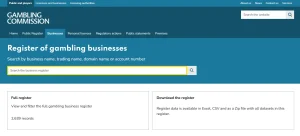
Before depositing, check the operator’s status on the UKGC public register and treat a credit-card offer with caution. If the site is not UK-licensed, it is not a lawful UK-licensed casino merely because it accepts registrations from British visitors or uses familiar payment logos. If it is UK-licensed, a GamStop-related claim still cannot override the restriction on credit-card payments for gambling.
I wouldn’t use “not on GamStop” as a payment filter. It tells you nothing about whether your card can be used lawfully, and it should never be read as permission to gamble with borrowed money. Separate the questions: check the operator’s regulatory status, then check which permitted payment methods it offers. A label is not a licence, and it is not a loophole.
Are Credit Cards Allowed for Gambling in the UK—and Since When?
No. Credit cards are not allowed for gambling at UK-licensed online casinos. The rule took effect on 14 April 2020, and it has not since been relaxed. If you are asking whether the answer has changed, it has not.
That date matters because older guides, saved pages or conversations may describe payment arrangements that were available before the ban. They do not establish what a licensed casino can accept now. The current position is the same: a UK-licensed casino cannot take a credit-card payment for gambling.
The ban is a regulatory rule, not a preference that an individual casino can switch off. Remote gambling businesses serving customers in Great Britain must hold the relevant Gambling Commission licence, and the credit-card restriction applies to those licensed services. A payment option appearing in an old article does not override it.
Direct Banking at UK Casinos: How Payments Work
The question of why credit cards were banned is best answered without dressing up a guess as the regulator’s stated reasoning: the practical purpose for a player is that credit cannot be used as the funding route for gambling at a UK-licensed casino. The important point is the rule itself, rather than speculation about the thinking behind it.
I would treat any claim that a UK-licensed casino currently accepts credit cards for gambling with caution. A site’s wording, an old review or a payment logo does not change the legal position. Nor does the fact that a card carries a familiar brand: the relevant question is whether the payment is a credit-card payment being used for gambling.
So, if you are checking the date, it is 14 April 2020. If you are checking whether the ban has been lifted, it has not. There is no later change in the rule to rely on. Keep those two points together: the restriction began on that date, and it remains in force.
That is the concise answer to both parts. Credit cards are not permitted for gambling at UK-licensed online casinos, and the ban has applied since 14 April 2020. A claim that the restriction is old, temporary or no longer relevant does not make credit-card gambling an allowed payment route today.
Before You Choose a Casino Payment Method, Check These Limits
A payment method can be listed on a casino’s page and still fail to fit the amount you want to deposit. I check the cashier while logged in, not just the general payments page: the options and limits shown there are the ones relevant to my account and selected route.
Payment Compatibility Check
- Verify the minimum deposit amount in the logged-in cashier
- Confirm the transaction does not exceed the method’s maximum cap
- Set a financial limit via the account controls
- Ensure the payment account name matches your casino account name
- Confirm the route is permitted for gambling and supports withdrawals
A specialist review puts common starting deposits in the £10–£20 range, depending on the method. Treat that as a guide, not a promise. The cashier may show a different minimum, and a payment provider can have its own rules. Before confirming, check that your intended amount meets the casino’s minimum and that the payment route accepts it.
The maximum needs the same attention. A specialist review notes that deposit ceilings can differ by payment method and account status, with separate limits applying to an individual transaction, a day or a month. Those distinctions matter: a route may allow a deposit that fits one limit but not another. Check the displayed cap for the transaction you are making rather than relying on a figure from a general page.
I also look at my account’s financial controls before depositing. UKGC rules require remote gambling licensees to prompt new customers to set a financial limit before their first deposit and to make account-level limit controls accessible. Set a limit you can stick to, then make sure it does not prevent the transaction you have planned. Don’t raise it just to get around a moment of friction.
There is one more compatibility check: use payment details and an account that belong to you. If the casino cannot match basic ownership details, a transaction can face avoidable friction. That is not a reason to try another person’s card or account.
Finally, check that the selected route is permitted for gambling and available for both the actions you need. A credit card is not an eligible gambling deposit route at a UK-licensed casino. For any permitted alternative, read the cashier’s terms and the provider’s own limits before sending money.
A quick check beats a failed transaction.
Trying to Play Slots with a Credit Card? Check the Payment Route First
If you want to play online slots at a UK-licensed casino, the payment route matters: the casino cannot accept credit-card payments for gambling. That remains true if you are only depositing to play slots, rather than another casino game. A card logo at the cashier does not mean every card carrying it can be used.
Click2Pay at UK Casinos: How to Check Availability
I used to see Visa or Mastercard and assume the checkout would treat my card as one thing. It does not. Those networks issue debit and credit cards, and UK casinos commonly accept debit cards, including Visa and Mastercard. Check the card type and the cashier’s current options before you try to fund your account. If it is a credit card, do not try to route the payment through a wallet or money service instead; credit-card funds cannot be used for gambling that way either.
A debit card in your own name is one permitted route to check. Keeping the payment account and casino account details under the same customer’s name can also avoid basic ownership mismatches slowing things down. No clever workaround needed.
Open banking is another route to look for in the cashier. It connects a payment to your bank account rather than turning a credit-card payment into something else. A specialist review describes open banking and bank transfers as capable of providing instant deposits and fast withdrawals at many sites, but that is not a promise for every casino or transaction. Check what the specific cashier offers.
Before confirming a slot deposit, make sure you have selected the intended payment method and read the screen carefully. If the available choice is unclear, stop and ask the casino’s support team rather than attempting to pass a credit-card payment through another service. The payment route should be permitted in its own right.
It is also worth setting a financial limit before depositing. UK-licensed remote gambling operators must prompt new customers to set one before their first deposit and provide accessible account controls for limits. I find it easier to make that decision before the reels are involved. Keep the payment simple, use a route that belongs to you, and do not treat a card logo as permission to use a credit card.
Why must withdrawals return to the deposit method?
Returning the money to the original payment source is a common anti-fraud and anti-money-laundering control. Using the same named account for deposits and withdrawals can also reduce avoidable ownership checks.
What is the fastest withdrawal method for UK casinos?
PayPal, open banking services and debit cards linked to fast payout systems are generally among the quickest options. Your payout can still take longer if the casino has not approved it or your account is not fully verified.
Why can a fast payout casino still delay my withdrawal?
The casino must complete its internal approval, and a first withdrawal may take longer while verification is completed. Your account’s verification status can also affect how quickly the payout is released.
Do UK casino withdrawals require verification?
Yes, verification may be needed, particularly before a first withdrawal. Completing it in advance can help avoid delays while the casino approves your payout.
Are fast casino withdrawals guaranteed?
No. Withdrawal speed depends on the casino’s approval process and whether your account is fully verified.
Which payment methods are accepted in Great Britain?
Options include debit cards such as Visa and Mastercard, PayPal, open banking, bank transfers, and e-wallets such as Skrill and Neteller. Some casinos also offer Apple Pay, while Paysafecard is for deposits; check the UK cashier for the methods available to your account.
Are Visa and Mastercard deposits definitely debit cards?
No. Visa and Mastercard are card networks used for both debit and credit cards, so the logo alone does not identify the card type accepted. Check the UK cashier or ask the operator to confirm which card products it allows.
Material created by the team Prestige