

A clear look at UKGC oversight, alternative licences, self-exclusion limits and the legal and safety questions around offshore sites.
What a UKGC Licence Actually Means
When I see a casino described as “UK-licensed”, the useful question is not where the company has its offices. It is whether the operator holds a licence from the UK Gambling Commission to serve customers in Great Britain. An operator’s location does not remove that requirement: a company based abroad still needs the relevant UKGC licence if it serves customers in Great Britain.
That is the baseline behind the phrase “UKGC-licensed online casino”. It describes a regulatory status, not a style of website, a brand’s nationality or a promise about how a particular gaming session will go. A familiar name or a British-looking site does not, by itself, tell you whether the operator has that status.
I used to give too much weight to the surface details: the language, the currency, the way a site presented itself. They can make a business feel local, but they do not answer the central question. The operator’s base and the market it serves are separate things. The licence requirement follows the service into Great Britain.
The location distinction
Imagine an operator whose business is based outside the country but whose customers include people in Great Britain. Its overseas address does not create an exception to the requirement for a UK Gambling Commission licence. Conversely, the phrase “based in Britain” is not a substitute for knowing whether the operator holds the relevant licence. The important point is the service being offered to customers in Great Britain.
That distinction is easy to lose when casino brands use words such as “international”, “global” or “UK-friendly”. Those descriptions might tell you how a company wants to present itself; they do not establish its UKGC status. I now treat branding as branding. The licence question is separate.
Non-UK-Registered Casinos: How Regulation Works
There is also a geographical detail in the wording worth keeping straight. The requirement described here concerns customers in Great Britain. “Great Britain” is not interchangeable with every use of “UK” in ordinary conversation. If a site speaks broadly about serving the UK, that wording alone does not explain what regulatory position applies in each part of the country.
What the label can—and cannot—tell you
A UKGC licence identifies the regulator whose licensing framework applies to an operator serving Great Britain. It is a more meaningful description than a site’s marketing language because it points to a specific regulatory status. But the label should not be stretched into claims it does not make.
It does not tell you, on its own, whether you will enjoy a particular game, whether a bonus suits you, or whether a brand’s advertising reflects your own experience. Those are different questions. I have learned not to let one reassuring-sounding label answer everything at once.
Nor should a list of casino brands be treated as a substitute for understanding the rule. If you are comparing UKGC-licensed online casinos, the shared starting point is that operators serving customers in Great Britain need the Commission’s licence regardless of where they are based. A name appearing in a recommendation or comparison does not change that basic requirement.
The phrase “UKGC-licensed” is therefore best read narrowly and clearly: it refers to the operator’s licensing status for serving the Great Britain market. It is not simply a claim that a site is popular with British players, displays prices in pounds, or has a company address somewhere in the UK.
A useful starting point
When I am trying to understand what a casino’s licence claim means, I separate three things that can easily blur together: where the operator is based, who regulates it, and which customers it serves. For the Great Britain market, the rule is straightforward on the point that matters here: an operator serving customers there needs a UK Gambling Commission licence, wherever its base of operation happens to be.
UK Casinos with No ID Verification: What It Means
That gives “UKGC licensed” a concrete meaning. It is not a decorative badge and it is not defined by the look or language of a website. It connects the operator to the licensing requirement for serving customers in Great Britain.
So if a casino’s presentation makes it seem local, I would not infer its licence from that impression. And if a company is headquartered elsewhere, I would not assume that its location settles the matter either. The relevant distinction is whether it serves customers in Great Britain and, if so, whether it holds the UKGC licence required for that market.
That is the reference point I keep in mind when I encounter the phrase “non-UKGC”. The label only makes sense against a clear baseline: operators serving Great Britain need the UK Gambling Commission’s licence, regardless of where they operate from. Simple, but easy to overlook.
What “Non-UKGC” Means on a Casino Site
“Non-UKGC” describes a casino that operates without oversight from the UK Gambling Commission. The label tells you what is not supervising the site; by itself, it does not tell you whether another regulator has issued a licence, or which one.
That distinction is easy to miss. I used to see a licence badge and treat it as a general stamp of approval. It isn’t. A casino can be outside the UKGC’s oversight and still claim to be licensed in another jurisdiction. The regulator named on that claim matters: “non-UKGC” is a broad description, not the name of a particular licence.
A label, not a licence
People use “non-UKGC casino” as shorthand for an online gambling site that falls outside the UK Gambling Commission’s supervision. You may also see the terms non-UK-regulated casino or non-UKGC-licensed casino. They point to the same central feature: the site is not overseen by the UKGC.
But the wording can blur two different things. “Non-UKGC” says the UK regulator is not the one overseeing the casino. “Licensed” suggests that a regulator elsewhere has authorised it. Those are not interchangeable claims, and the first does not prove the second. A site’s wording is not enough to establish which authority, if any, is behind its licence claim.
Non-UK Casinos: What a UKGC Licence Means
So when I come across a non-UKGC casino site, I try to read past the label. The useful question is not just whether the casino is outside UKGC oversight, but which jurisdiction it says regulates it. That gives the phrase some actual meaning instead of leaving it as a vague badge.
Jurisdictions you may see named
Non-UK-regulated casinos are commonly associated with licensing jurisdictions such as Malta, Curaçao, Gibraltar and Anjouan. These names may appear in a site’s footer, terms or licence information. Their presence indicates the jurisdiction the operator says is relevant to its licensing; it does not make the site UKGC-regulated.
That is why “non-UKGC casinos” covers a mixed group rather than one uniform kind of casino. The shared feature is the absence of UK Gambling Commission oversight. The licensing jurisdiction named by an operator can differ from site to site.
I find it helps to separate the label from the details. If a page says “international” or “offshore”, that still does not name a regulator. If it says “licensed in Malta” or names another jurisdiction, that is a more specific claim, but it remains a claim about a different regulator—not a UKGC licence. The words can sound reassuring. They need context.
What the phrase does not tell you
The phrase does not identify the operator’s licensing jurisdiction, and it does not describe the particular licence the operator may hold. Nor does it mean every casino outside UKGC oversight is licensed in the same place. Malta, Curaçao, Gibraltar and Anjouan are examples of jurisdictions commonly associated with these sites, not a single shared licensing system.
It also does not tell you, on its own, what rules apply to a particular casino. Two sites may both be described as non-UKGC while naming different jurisdictions. Treating them as identical because they share a label is a shortcut I wouldn’t rely on.
Common Jurisdictions
Non-UKGC casinos are frequently associated with licensing from Malta, Curaçao, Gibraltar, and Anjouan.
If you searched for non-UKGC licensed casinos in the UK, the phrase can sound as if “non-UKGC” names a recognised licence type. It doesn’t. It describes the site in relation to the UK regulator. The rest of the wording is important: a casino may claim an overseas licence, but that is a separate detail from its lack of UKGC oversight.
That is the cleanest way I know to read the term: first, it tells you the UK Gambling Commission is not supervising the site; then, if the operator names another licensing jurisdiction, consider that as a separate piece of information. “Non-UKGC” is a starting label, not the whole story.
Casino Sites Outside UKGC Oversight: How They Operate
The practical difference between UKGC-licensed casino sites and sites outside that system often shows up after you have opened an account: in the payment options, the checks attached to a withdrawal and how long it takes to get your money back. A non-UKGC casino site may have looser deposit or withdrawal policies, which can mean fewer restrictions or a quicker payout. But “looser” is not the same as predictable. Each operator sets its own terms, and the payment method you use to deposit does not guarantee that you can withdraw by the same route.
Depositing: more routes, more variation
Non-UKGC casino websites may accept credit cards, e-wallets, bank transfers and cryptocurrency. Payments can be handled through alternative processors, so the name shown at checkout might not match the casino brand. That can be confusing if you are trying to work out where a payment went or what will appear on a statement.
Non-Gamban Casinos in the UK: What It Means
Crypto is another option offered by some sites. It can bypass the UK ban on credit-card-funded gambling, but that does not make a crypto deposit a dependable way to cash out. The casino may set different rules for deposits and withdrawals, and the available withdrawal routes can depend on its terms and your account checks.
I have learned not to treat a payment logo as a promise. Before sending money, check the cashier and the withdrawal rules separately. See whether the site explains which methods can be used for payouts, whether it requires a particular route, and what conditions apply. A method appearing on the deposit screen tells you only that the site may accept it there.
A specialist review has also reported mobile-phone-bill deposits and payments taken from prepaid balances at some offshore casinos. That is a specific reported feature, not something to assume you will find across non-UKGC casino sites in the UK. If an operator offers it, check the terms and any applicable payment restrictions before using it.
Withdrawals: the clock can vary
Published withdrawal estimates are not consistent. Some accounts describe payouts arriving within 24 hours to 5 business days; other accounts say the process can stretch to three or four weeks. Those are very different expectations, and there is no regulatory clock enforcing a payment deadline in the latter case. The actual wait may depend on the casino, the payment route and whether it asks for more information.
A payout marked “pending” may not yet have been sent to your bank or wallet. The casino may still be reviewing the request or checking account details. If something is unclear, ask the operator what stage the payment has reached and what it needs from you. Keep copies of the relevant terms and any messages. It is easier to follow a timeline when you have the details in writing.
Withdrawal Timing
Payout timelines vary significantly, with some reports indicating waits from 24 hours up to several weeks.
Withdrawal limits are another point to check. A specialist review has reported daily, weekly or monthly caps at some operators, which can mean a large win is paid in instalments rather than as one transfer. Treat that as a reported possibility, not a standard rule for every site. Look for limits in the cashier terms and the withdrawal section before depositing; a headline payment promise may not tell you how a larger request is handled.
Verification can arrive at payout time
A casino may ask for identity or payment documents before releasing a withdrawal. That can be part of its account checks, but it can also add time, particularly if the instructions are unclear or documents need to be resubmitted. A specialist review has described some operators requesting notarised documents or a video call in connection with withdrawals. Those are reported cases, not routine requirements to expect from every non-UKGC casino website.
Read the verification terms before you play, and check whether the operator explains how documents should be submitted. If a request seems unusually burdensome, pause before sending sensitive material and ask for an explanation through the casino’s stated support channel. Do not assume the process will be quick just because a deposit was accepted immediately.
The useful question is not simply whether a casino takes your preferred payment. It is whether its written terms explain deposits, withdrawals, limits and checks clearly enough for you to understand what happens next. When they do not, that uncertainty is part of the deal. That matters.
“Best” Non-UKGC Casinos: What the Label Can’t Tell You
If you’re considering a casino that is not UKGC-licensed, check the licensing details and terms carefully before deciding where to play. Use this list as a starting point, not a substitute for your own checks.
1. Chanze
Payout speed: 1-3 business days Chanze lists a payout speed of 1–3 business days. Check the applicable terms to understand how that timing applies to you.
2. EvoSpin
Payout speed: 1-3 business days EvoSpin lists a payout speed of 1–3 business days. Review its terms before relying on that timeframe.
3. Zombillion
Payout speed: 1-3 business days Zombillion lists a payout speed of 1–3 business days. Check the terms for details relevant to your withdrawal.
4. SpinFormula
Payout speed: 1-3 business days SpinFormula lists a payout speed of 1–3 business days. Treat this as the stated timeframe and check the terms for further details.
5. Amunbet
Payout speed: 1-3 business days Amunbet lists a payout speed of 1–3 business days. Review the applicable terms before making a decision.
6. x3bet
Payout speed: 1-3 business days x3bet lists a payout speed of 1–3 business days. Check its terms to see how the stated timeframe applies.
7. Revery Play
Payout speed: 1-3 business days Revery Play lists a payout speed of 1–3 business days. Check the terms for any further information about payouts.
8. WinBeast
Payout speed: 1-3 business days WinBeast lists a payout speed of 1–3 business days. Review the terms before relying on this stated timing.
9. SlotoSport
Payout speed: 1-3 business days SlotoSport lists a payout speed of 1–3 business days. Check the applicable terms for details about your withdrawal.
10. NightWin
Payout speed: 1-3 business days NightWin lists a payout speed of 1–3 business days. Review its terms to understand the stated timeframe.
“Best” is doing a lot of work in casino advertising. It might mean a large welcome offer, a stack of free spins or simply a headline designed to get you to register. None of those tells you what you must do before bonus funds or winnings can be withdrawn. I’ve learned to read the terms before getting excited about the number on the banner.
A bonus is not just extra money. It is an offer with conditions, and those conditions decide how much of it is usable. Check what the wagering requirement applies to: the bonus alone, your deposit as well, or a bundle that includes free spins. Those are different calculations, even when the headline makes the offer sound similar.
A specialist review has reported offshore welcome bonuses with wagering requirements of 35x or more. Treat that as a reported example, not a rule for every casino or a promise about a current offer. The same kind of review has described a 40x requirement applied in different ways: to the bonus and deposit together, to the bonus alone, or to the bonus and free spins combined. The wording in the casino’s own terms matters more than the promotional summary.
That distinction can change the real cost of accepting an offer. If the requirement is unclear, or the terms do not explain what counts towards it, I would not assume the most favourable interpretation. “Generous” can mean a larger headline figure with more play required before the offer is cleared. Read the small print first.
Do
- Check wagering requirements for bonus and deposit
- Verify eligible games and maximum bet limits
- Confirm the expiry date of free spins
Don’t
- Rely on the headline value of a welcome offer
- Assume “generous” means easy to withdraw
- Accept bonuses with unclear terms
Free spins need the same treatment. A specialist review has reported requirements of 30–50 times the winnings, alongside withdrawal caps of £5–£50. Those figures are not a universal schedule; offers differ, and terms can change. The practical point is to find out whether winnings are subject to wagering, whether a cap limits what can be withdrawn, and whether the cap applies to the winnings or to something else. A pile of spins can look generous while leaving little room to keep the result.
The expiry date matters too. One specialist review describes free-spin packages expiring within 24–72 hours. That is a reported range, not a dependable timetable for every offer. Check when the spins become available, when they must be used and whether any resulting winnings have a separate deadline. If you cannot meet the conditions in time, the headline value may be irrelevant.
I’d also look for restrictions that are easy to miss in a short advert: which games count, whether a maximum bet applies while wagering, and whether the offer must be claimed before you deposit. These are questions to answer from the actual terms, not assumptions based on another casino’s promotion. If the terms are hard to find or explain, that itself is a reason not to rely on the advertised value.
The same goes for labels such as “trusted” or “top”. They are not a substitute for checking the offer you would actually accept, and they do not establish that a casino is suitable for you. A new site may present a polished bonus; an older one may advertise a familiar deal. Neither age nor presentation settles what the conditions allow.
I wouldn’t choose a non-UKGC casino on the size of its welcome offer. Compare the full terms, including wagering basis, eligible games, expiry and any withdrawal cap. If a promotion cannot be understood without guessing, leave it alone. No bonus is worth guessing.
Non-UKGC Regulated Casinos: Different Licences, Different Limits
“Non-UKGC” is a broad label, not a single regulatory standard. A casino may operate under a licence from Malta, Curaçao, Gibraltar or Anjouan, but those names do not describe one shared set of rules. The licence jurisdiction matters; the label alone tells you little about what checks or remedies sit behind it.
Curacao Casino Licence in the UK: What It Means
I used to treat a licence badge as if it settled the question. It doesn’t. You need to know who issued it and what that authority actually requires. An Anjouan casino licence, for instance, comes with specific limits that are worth understanding rather than smoothing over with a generic claim that a site is “licensed”.
Under Anjouan’s framework, operators are not required to have their games’ random number generators tested, undergo audits, or keep player funds segregated. Those are distinct issues: game testing concerns how outcomes are checked, audits concern scrutiny of an operator, and segregation concerns whether customer money is kept apart from business funds. The framework does not mandate those measures.
That does not prove that every Anjouan operator skips testing, audits or separate accounts. It means the licence framework does not require them. There’s a difference. A casino might make claims about its own practices, but those claims are not the same as a requirement imposed by the regulator.
Complaints are another point where the jurisdiction matters. The Anjouan authority does not take up player complaints, mediate between a customer and a casino, or decide who is right in a dispute. A licence from that authority therefore should not be read as a promise that the regulator will intervene if an argument with the operator goes nowhere.
Anjouan Licence Risk
Under the Anjouan framework, there are no requirements for game testing, audits, or the segregation of player funds from business funds.
That distinction can get lost in a polished review or on a site’s footer. A badge may look official, and the word “regulated” sounds reassuring, but neither tells you whether the regulator tests games, checks company records or hears complaints. Those are separate questions.
It would be just as misleading to assume that every licence outside the UKGC works like Anjouan’s. Malta, Curaçao and Gibraltar are separate jurisdictions, with their own regulators and rules. Their names are not interchangeable, and the limits set out above apply to Anjouan’s framework—not automatically to every non-UKGC casino operator.
So when comparing non-UKGC casino sites, start with the precise licence rather than a broad category or a confident review score. Then look at what that regulator requires and what role it plays if a dispute arises. A licence can identify oversight; it does not, by itself, tell you how extensive that oversight is.
That’s the useful distinction. A name on a badge is only the start.
Casinos Without GamStop: What Self-Exclusion Doesn’t Cover
GamStop is a UK-wide self-exclusion scheme, but its reach has a boundary: casinos outside it are not part of the UK Gambling Commission’s scheme. If you have excluded yourself through GamStop, do not assume that restriction applies everywhere you can find a gambling site. A casino not participating in the scheme will not be blocked by your GamStop exclusion.
Non-GamStop European Casinos: What UK Rules Say
That distinction matters when you are trying to stop, not just when you are comparing sites. Self-exclusion is meant to put a barrier between you and gambling accounts. If you look for a route around that barrier, a site outside GamStop may appear to offer one. I have learned the hard way that finding a way to keep playing is not the same as finding a safer way to do it.
“UKGC casino without GamStop” is a contradiction
The wording can get muddled. A site outside GamStop is not, by that fact alone, a UKGC casino. Casinos not on GamStop sit outside the UKGC self-exclusion scheme; describing one as a “UKGC casino not affected by GamStop” blurs two different things.
For someone trying to stay excluded, the practical point is simpler than the label: GamStop does not cover every gambling site. A search for casinos not blocked by GamStop can lead you towards services that do not participate in the scheme. That does not make them a workaround endorsed by GamStop, or an extension of your existing exclusion. It means the barrier may not reach them.
What you lose when you step outside the scheme
At an offshore casino, you also lose access to mandatory responsible-gambling tools available through the UK-regulated system. Those protections are not interchangeable with a personal promise to stop, a reminder on a screen or a limit you set for yourself. If you are relying on external restrictions to help control your gambling, moving to a site outside that system removes an important layer of support.
I used to treat a barrier as an inconvenience I could get around. That thinking made it easier to ignore why I had put the barrier there in the first place. If you have enrolled in self-exclusion because gambling is causing harm, searching for sites that do not recognise it can undermine the decision you already made.
GamStop Limitation
Casinos outside the UKGC system do not participate in the GamStop scheme and will not block you based on that exclusion.
Before opening another account, pause and consider what you need the exclusion to do for you. If you are looking for a casino specifically because GamStop does not block it, that is a warning sign worth taking seriously. You do not have to prove you can resist a site that the scheme does not cover.
Casinos outside GamStop should not be treated as a continuation of UKGC protection. The scheme’s exclusion does not extend to them, and the responsible-gambling tools available there are not the mandatory UK system you may be counting on. A gap in coverage is real. So is the reason you wanted a barrier.
Offshore Casino Safety: The Risks You Can’t Brush Off
I used to treat a polished site and a reassuring “trusted” badge as signs that my money and personal details were in safe hands. They aren’t. A professional-looking page can tell you very little about what happens when something goes wrong.
A non-UK-regulated casino may have less demanding responsible-gambling and data-protection rules than a UKGC-licensed operator. That can mean fewer safeguards around how gambling is managed and how personal information is handled. Don’t assume that familiar account features or confident wording mean the same protections apply. They may not.
The gap matters most when you need to limit your gambling or want to know how your data is being protected. Safeguards such as deposit limits and self-exclusion may not be available on the same basis as at UKGC-licensed real-money casinos. I’d be wary of calling any site “safe” simply because it accepts UK customers or looks established. A label is not a safety net.
VPN-Friendly Casinos in the UK: What to Know
There is also a direct financial risk with an Anjouan-licensed casino. Player funds are not guaranteed to be kept separate from the operator’s money. If the business fails, you may be an unsecured creditor: in plain English, you could be owed money without having the protection of funds ring-fenced for players. That is a very different position from assuming your balance is safely set aside.
Before putting money or personal details anywhere, think about what you would stand to lose if the operator stopped trading, and whether the safeguards on offer are enough for you. I’ve learned not to confuse a smooth sign-up with protection when it counts.
Not a small distinction.
Casinos Not Licensed by the UKGC: The Legal Position
The legal distinction is mainly about who is supplying the gambling service. Under the Gambling Act 2005, the focus is on operators offering gambling to the UK market, not on individual customers. A casino serving people in Great Britain without the required UK Gambling Commission licence may therefore be operating outside the rules that apply to the British market.
That does not mean the law explicitly makes it a crime for a British citizen to use a gambling service licensed in another country. Simply placing a bet on a site without a UKGC licence does not, by itself, mean the player has committed a criminal offence under UK law.
Those points can sound like a green light. They are not the same thing. UK online gambling is meant to take place through licensed and regulated sites, and a licence issued elsewhere does not turn a site into a UKGC-licensed operator. I would not treat the absence of a specific offence for players as proof that every arrangement is lawful or risk-free.
Regional Laws
The Gambling Act 2005 governs England, Wales, and Scotland, but does not apply to Northern Ireland.
The rules can also depend on where you live. The Gambling Act 2005 governs England, Wales and Scotland, but not Northern Ireland, so do not assume one sentence covers every part of the UK. You are responsible for checking the laws that apply to you and understanding what using a casino outside UKGC oversight means in practice. The operator’s licence and your own legal position are separate questions. Check both before you decide.
UKGC-Licensed Casinos and the Protections They Provide
When a dispute comes up, the licence behind a casino matters for more than the wording in its footer. At a UKGC-licensed casino, there is a UK complaints framework to turn to. At a casino operating outside that framework, you cannot use the UK Gambling Commission’s complaints procedure or a UK-approved alternative dispute resolution (ADR) service.
That difference is easy to miss while everything is working. I’d be wary of assuming that a casino’s own complaints team is the same thing as independent review. It isn’t. If you and the operator disagree about how a term was applied, or about the handling of your account, the available route depends on the operator’s regulatory framework.
UK-approved ADR gives eligible disputes a route beyond the casino itself. It is not a promise that every complaint will go your way, and it does not remove the need to raise the issue with the operator. But it is a meaningful distinction: the dispute can be considered through an independent route approved for the UK system.
An Anjouan-licensed casino does not offer an equivalent independent dispute-resolution route. The authority there does not mediate or decide player complaints; the operator is required to respond to complaints within 30 calendar days. A response from the operator is not the same as an independent decision. That gap matters if the response does not settle the disagreement.
Don’t let a “licensed” badge do all the thinking for you. A UKGC casino and a casino licensed elsewhere may both display a regulator’s name, but that does not mean you have the same place to take a complaint. Check which regulator issued the licence and what dispute route applies before depositing. A licence checker can help confirm the regulator and operator details, but it cannot make an overseas complaints process equivalent to UK-approved ADR.
This is also why casinos free of UKGC self-exclusion should not be mistaken for UKGC casinos: being outside that system does not bring its complaint protections with it. I’d rather know the route before there’s a problem than discover it while trying to resolve one.
Keep the distinction plain: an operator’s reply is one thing; independent review is another. If a site is not under UKGC oversight, you have no access to the Commission’s complaints procedure for that casino. That is a practical limit, not small print.
How to Check a Casino Licence Before You Sign Up
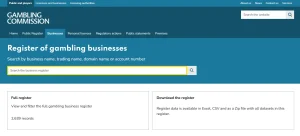
I used to treat a licence badge in a website footer as proof. It isn’t. A logo is a claim; the register is where you check it.
For a casino claiming an Anjouan casino licence, find the regulator’s public register and look up the operator. Check that the entry is current, note its expiry date, and compare the company name on the register with the company named in the casino’s terms. If the names do not match, or you cannot find the claimed entry, don’t assume the badge settles anything. Check the terms too: an Anjouan casino licence does not authorise the operator to serve customers in the United Kingdom or any other restricted market listed in its conditions.
If a site says it is licensed by the UK Gambling Commission, verify that claim against the Commission’s own public register. Search for the exact operating company, not just the casino brand, and confirm that the licence is current and covers the activity offered. That is how I’d check a UKGC claim; an overseas licence is not a substitute for it.
There is another detail worth reading before you deposit. Under Anjouan’s framework, an operator must respond to a complaint within 30 calendar days, but that does not give you an independent dispute-resolution route comparable to UKGC-approved ADR. A response deadline is not the same as an outside body deciding the dispute. Small distinction. Big difference.
How do casinos outside GamStop operate?
They operate outside the UK Gambling Commission’s oversight and are not part of its GamStop self-exclusion scheme. Some are licensed in other jurisdictions, such as Anjouan.
Are Anjouan casinos connected to the GamStop self-exclusion scheme?
No. Anjouan-licensed casinos are not required to integrate GAMSTOP.
Are Anjouan-licensed casinos safe and fair?
An Anjouan licence does not guarantee safety or fairness: the framework does not require RNG testing, audits or segregated player funds. The Anjouan authority also does not handle or adjudicate player complaints.
Are gaming sites not on GamStop permitted for UK players?
UK law does not explicitly prohibit British citizens from using gambling services licensed in other countries, and players do not commit a criminal offence by using unlicensed sites. However, operators serving customers in Great Britain need a UK Gambling Commission licence; an Anjouan licence does not authorise operation in the UK.
Material created by the team Prestige