

A Curaçao licence claim does not establish UK authorisation or connection to GAMSTOP, so assess each question separately.
What a Curaçao Casino’s Online Licence Does—and Doesn’t—Tell You
A Curaçao licence label tells you what an operator claims about its licensing. For a player in Britain, it does not by itself tell you that the casino is authorised to offer online gambling here, or that it is connected to the UK’s self-exclusion system. Those are separate questions, and I’d keep them separate when reading any licence badge.
Remote gambling operators that serve customers in Great Britain must hold the relevant licence from the UK Gambling Commission, wherever the business is based. Online gambling is legal here only at sites licensed and regulated in the UK. An operator holding a licence elsewhere is not thereby a UKGC-licensed casino. That distinction matters more than how polished the licence graphic looks.
I used to treat a licence logo as if it answered every sensible question at once: who oversees the site, which rules apply, and what happens if something goes wrong. It doesn’t. A logo or a line in a footer is a claim to assess, not a substitute for identifying which regulator authorises the business to serve British customers. “Licensed” can sound like a full safety verdict. It isn’t.
That is particularly important when you see online casinos licensed in Curaçao presented as though the word “licensed” settles their status for UK players. A Curaçao licence claim and a UK Gambling Commission licence are not interchangeable. If an operator is offering real-money gambling to people in Great Britain, the relevant question is whether it holds the UK licence required for that activity—not simply whether it names a regulator elsewhere.
The licence question is also distinct from GAMSTOP. GAMSTOP is a multi-operator self-exclusion scheme. It blocks access across participating licensed online gambling websites and apps; it is not a general internet filter that follows every gambling brand or every licence label. The Gambling Commission made participation compulsory for online operators from 31 March 2020. That date and scope explain why UK licensing and GAMSTOP are closely linked, but they are still different things: one concerns permission to operate in the British market, while the other is a self-exclusion scheme.
Casino Licensing and Safety in the UK
So, if a Curacao online casino site says it is licensed, that statement alone does not establish that it participates in GAMSTOP. Nor does the absence of a GAMSTOP reference prove what licence the operator has or whether it can lawfully serve customers here. Don’t make one label do the work of another. Check the UKGC status separately, and treat claims about other licensing separately too.
A “new” casino can make this harder because a fresh brand may have little history for you to weigh. The same caution applies to familiar-looking wording, professional design, or repeated claims about being among the best. Those are presentation choices. They do not change the legal requirement for remote operators serving Great Britain, and they do not show that a site is part of GAMSTOP.
I’m not saying every licence claim is false. I’m saying the claim has a narrower meaning than its marketing may suggest. It may tell you that the operator says it has a licence in a particular jurisdiction. It does not, on its own, establish UKGC authorisation, GAMSTOP participation, or what would happen if you needed to enforce an exclusion. Different checks, different answers.
There is another point people can miss: UK-licensed casinos must provide responsible-gambling tools, including self-exclusion. Gambling businesses are required to offer self-exclusion by law. That obligation belongs in the conversation about licensed UK operators; a foreign licence badge should not be read as proof that the same UK requirements apply to a site. A licence label is not a complete description of a player’s protections.
When you compare Curaçao online casino claims with the British system, keep the questions plain: which regulator authorises this operator to serve customers in Great Britain, and is the site within GAMSTOP’s participating network? Don’t assume the answer to one tells you the answer to the other. And if you have excluded yourself, don’t open an account elsewhere to get around that decision. The label won’t make that a safe workaround.
I’ve learned to pause at the word “licensed” and ask what it actually establishes. For a UK reader, the key distinction is between a claim about an overseas licence and the UKGC authorisation required to offer remote gambling here. GAMSTOP has its own defined network of participating licensed sites and apps. Keep those boundaries clear. No magic badge.
Attention: A Curaçao licence claim does not establish UKGC authorisation or GAMSTOP participation; these must be checked as separate requirements.
Non-GAMSTOP Sites and the Self-Exclusion Risk
A site described as a Curaçao casino “not on GamStop” can sound like a simple gap in a block: you sign in, and the exclusion no longer applies. That is the wrong way to read it. GAMSTOP is designed to stop you accessing existing gambling accounts or opening new ones with participating UK online operators. A site outside that scheme may not receive the same exclusion signal, so it may not block you in the way a UK-licensed casino does.
That difference is about whether the site participates in the scheme, not whether your decision to self-exclude has somehow been cancelled. If you registered with GAMSTOP, your exclusion remains in place for the period you selected. Looking for a Curaçao casino that does not use GAMSTOP does not lift it.
I used to treat a missing barrier as permission. It isn’t. If you agreed to stop gambling, playing at a non-GAMSTOP casino could breach your self-exclusion terms, even if the site lets you register or deposit. The fact that a website accepts an account is not evidence that gambling there is consistent with the agreement you made.
Why the distinction matters
GAMSTOP lets people exclude themselves from UK-licensed online casinos through one scheme. Since participation became compulsory for UK Gambling Commission-licensed online operators in 2020, those operators have been required to block self-excluded customers. A Curaçao label alone does not mean a site is connected to GAMSTOP or will apply its checks.
There is a separate UK licensing point, too. A remote operator offering gambling to people in Great Britain must hold a UK Gambling Commission licence, wherever the business is based. An offshore licence is not a substitute for that local licence. So a site promoted as a Curaçao casino not on GamStop is not simply another UK-licensed casino with a different badge; it may sit outside the UK regulatory system and its protections.
Non-UK-Registered Casinos: How Regulation Works
That does not make the exclusion less real. Self-exclusion is a formal agreement, and gambling businesses must offer customers a way to exclude themselves. If you self-exclude directly with a business, it should refuse you service under that agreement. If you have excluded yourself from several places, the practical aim is to stay away from all the places where you might be tempted to gamble, not just the accounts that visibly show a block.
The risky thought is, “This one does not know about my exclusion, so it must be fine.” I have found that logic persuasive when I wanted to keep playing—and unreliable when I considered what I had actually agreed to do. A website’s access controls cannot decide for you whether breaking that agreement is harmless.
Don’t make another account the plan
Do not open another account elsewhere to get around an exclusion. A different email address, a new profile or a site outside GAMSTOP does not undo the commitment you made. It can make it easier to keep gambling while your original safeguards are still active. That is not a safe workaround.
Risk of Breach
Opening a new account at a non-GAMSTOP site to bypass an exclusion is not a safe workaround and could breach your self-exclusion terms.
If you have already self-excluded and feel drawn to a Curaçao casino, pause before registering or paying in. Re-read the terms of your exclusion and contact the scheme or gambling business involved if you are unsure what you agreed to. If gambling is becoming difficult to control, GamCare offers support; you do not need to wait until a problem has become worse to ask for help.
It is also worth being clear about what a regulator can and cannot do. The Gambling Commission regulates licensed operators, but it cannot refund money you have spent gambling. Don’t treat a possible complaint or a licence label as a way to make losses reversible. Check the protections before you deposit, and remember that a foreign licence does not put an operator inside the UK scheme.
The same caution applies to basic account safeguards. UK-licensed operators must verify a customer’s age before allowing deposits, provide responsible-gambling tools, and make account-level financial limits available. British online slots cannot use autoplay, and each spin must last at least two and a half seconds. Those protections do not transfer just because an offshore site advertises itself to UK players.
I know how quickly “just checking” can turn into another session. If your self-exclusion was meant to create distance, choosing a site that may not recognise it pulls in the opposite direction. Keep the exclusion in place, avoid gambling accounts elsewhere, and get support if the urge is hard to manage. No loophole.
What “Not Registered with GAMSTOP” Means in Practice
GAMSTOP is a national online self-exclusion scheme for Great Britain, but its reach is defined by the gambling websites and apps that participate in it. It is a multi-operator scheme: registering can block access across participating services, rather than only one company’s platform. It is not a universal switch that shuts off every gambling site a person might encounter online.
Non-Gamban Casinos in the UK: What It Means
That distinction matters when you see a Curaçao casino described as “not registered” or “not covered”. Those phrases describe a claimed relationship with GAMSTOP; they do not, by themselves, establish what protections the business provides or what licence it holds. Nor do they tell you that a site has been checked against an official, complete register of every casino outside the scheme.
I used to treat labels as answers. They aren’t. “Not blocked” may be shorthand for a site sitting outside GAMSTOP’s participating network, but a slogan on a casino page is not proof of its status. The practical question is narrower: is that particular gambling website or app within the scheme’s coverage? GAMSTOP’s function is to block access across participating licensed online gambling services, not to certify every other site as safe or suitable.
The word “licensed” needs care here, too. In Britain, operators offering remote gambling to consumers must hold the relevant UK Gambling Commission licence. A Curaçao licence claim is not the same thing as a UKGC licence, and it does not place a casino inside GAMSTOP’s network. A foreign licence label cannot turn the scheme into a general block on all gambling available on the internet.
That is why a search for Curaçao casinos not affected by GAMSTOP can produce a misleading impression. “Outside the scheme” is a statement about coverage, not a quality mark. It does not say whether a business will honour a self-exclusion request made directly to it, or whether it has effective protections of its own. Gambling businesses must provide a way to self-exclude; UK-licensed operators are also required to participate in GAMSTOP. Those are related protections, but they are not interchangeable.
Do
- Check the UKGC status separately
- Request self-exclusion directly from the business
- Identify all potential gambling routes
Don’t
- Assume a Curaçao licence implies UKGC approval
- Use a payment logo as proof of safety
- Use a single label to confirm different protections
It’s easy to assume that a familiar payment name settles the question. It doesn’t. Seeing Neteller or Skrill mentioned in connection with a Curaçao casino would not, on its own, show whether the casino is covered by GAMSTOP, and it would not establish that the site accepts either service. Payment branding and self-exclusion coverage answer different questions.
If you want to exclude yourself from gambling, think beyond one scheme’s reach. GAMSTOP covers participating online services; individual gambling businesses can also handle self-exclusion directly, and land-based venues have their own arrangements. Identify the places where you might be tempted to gamble and take steps to exclude yourself from each relevant route. No single label on a casino page should be treated as confirmation that every possible route is closed.
For a British player, the distinction is straightforward even if the marketing is not: GAMSTOP is a multi-operator scheme, not a web-wide filter. Whether a particular Curaçao site sits outside its coverage does not tell you that it is authorised to serve British customers, or that it will reliably protect someone who wants to stop gambling. Two separate checks.
How to Read Curaçao Licence Claims Without Treating Them as a Verified List
A page headed “Curaçao casino licence list” can look like a register, but a list on a review site is not automatically an official record. I used to treat a badge and a tidy table as proof that someone had checked the details. That was too generous. The heading tells you how the page wants to be read; it does not, by itself, establish who issued a licence, whether it is current, or which company it covers.
The same caution applies when a casino says it holds a Curaçao licence. A licence claim and permission to serve customers in Britain are different things. Remote gambling operators offering services to people in Great Britain must hold the relevant UK Gambling Commission licence, wherever the operator is based. A Curaçao licence claim does not establish that UK licence or make the business part of the UK regulatory system.
Non-UK-Regulated Casinos: What Players Should Know
That distinction matters when you are trying to check a Curaçao casino licence. Look at what the claim actually identifies: the operator’s legal name, the licensing authority it names, and whether the details are presented as applying to the site you are considering. A logo alone gives you little to work with. If the site’s branding and the company named in its terms do not line up clearly, do not fill the gap with assumptions.
But even a neat company name and licence reference only answer the question they are tied to. They do not tell you that every site using the same brand is covered, that the licence is a UK licence, or that the operator participates in GAMSTOP. Those are separate checks. A directory may be useful as a starting point, but calling it a verified list does not make its entries independently verified.
There is one firm date worth keeping in view. From 31 March 2020, online gambling operators holding UK licences were required to take part in GAMSTOP. That requirement concerns the UK licensing system. It does not turn a Curaçao licence into a UK licence, nor does a Curaçao listing establish that a site is covered by the scheme.
From 31 March 2020, participation in GAMSTOP became compulsory for all online operators holding a UK gambling licence.
I would read claims such as “Curaçao eGaming licensed” as a claim about the licence named by the operator, not as a shorthand for UK approval or GAMSTOP participation. If a page combines those ideas, separate them before trusting its conclusion. The licence question is about the operator and the authority it identifies; the GAMSTOP question is about participation in the relevant multi-operator scheme.
A Curaçao casino licence list can therefore answer only a narrow question if its entries are genuinely supported: which operators are claimed to hold a particular licence. It cannot, on its own, certify that a site is lawful to serve British customers or that a self-exclusion block will apply there. I would not treat a promotional directory as an official register, or a licence badge as proof of protections it does not claim to provide.
Separate checks. Different systems.
“Best” Is Not a Safety Guarantee
If you’re exploring non-GamStop Curaçao casino sites in 2026, payout timing is one practical detail to check. Use this list as a reference for the payout speed provided for each operator.
1. Chanze
Payout speed: 1-3 business days Chanze lists a payout speed of 1–3 business days, giving you a stated timeframe to consider.
2. EvoSpin
Payout speed: 1-3 business days EvoSpin lists a payout speed of 1–3 business days, a useful detail for your review.
3. Zombillion
Payout speed: 1-3 business days Zombillion lists a payout speed of 1–3 business days, so you have a stated payout timeframe to refer to.
4. SpinFormula
Payout speed: 1-3 business days SpinFormula lists a payout speed of 1–3 business days for you to factor into your choice.
5. Amunbet
Payout speed: 1-3 business days Amunbet lists a payout speed of 1–3 business days, providing one concrete point for your comparison.
6. x3bet
Payout speed: 1-3 business days x3bet lists a payout speed of 1–3 business days, giving you a stated timeframe for payouts.
7. Revery Play
Payout speed: 1-3 business days Revery Play lists a payout speed of 1–3 business days, which you can take into account when reviewing it.
8. WinBeast
Payout speed: 1-3 business days WinBeast lists a payout speed of 1–3 business days, offering you a clear stated detail to consider.
9. SlotoSport
Payout speed: 1-3 business days SlotoSport lists a payout speed of 1–3 business days for payouts.
10. NightWin
Payout speed: 1-3 business days NightWin lists a payout speed of 1–3 business days, a practical detail for your review.
“Best” looks like a verdict. On a casino page, it may be no more than a label attached to a recommendation. I’ve learned not to treat polished wording as evidence that a business will act responsibly when a customer wants to stop.
A ranking can tell you what its writer chose to feature. It cannot, by itself, show how a casino handles self-exclusion, whether it will refuse service to someone who has excluded themselves, or what happens when a customer’s request is made. A confident description is not the same as a clear policy.
That distinction matters when you are weighing up Curaçao casinos marketed to UK players. A site might be described as one of the best without that phrase telling you anything dependable about its approach to exclusion. I would not use a “top pick” badge as a shortcut for checking the thing that matters: will the business keep you out when you ask it to?
In the UK, gambling businesses must provide self-exclusion, and a business should refuse service to customers who have excluded themselves from it. Businesses are also required to take reasonable steps to prevent an excluded customer from gambling. Those are meaningful protections, but a recommendation page cannot prove that a particular operator is applying them well. Look for the operator’s own self-exclusion information and whether it explains how to make a request and what the business does afterwards. Vague reassurance is not much to go on.
If an article calls something the best Curaçao casino, I’d also check what “best” means in that context. Is the writer explaining the standard used, or simply repeating a promotional description? Does the page discuss self-exclusion as plainly as it discusses bonuses or games? If it does not, that silence should make you cautious, not reassured. The label may be doing more work than the evidence.
I’m not saying a ranking is useless. It can help you notice what a page is recommending. It just cannot make a decision about your safety for you. I used to read a confident verdict and feel as if someone had already done the hard checking. That was wishful thinking. A recommendation can be persuasive and still leave the important question unanswered.
Safety Check
Prioritise a business’s actual self-exclusion policy over promotional adjectives like "best" or "top".
If you have already self-excluded, don’t let a “best” badge persuade you that another site is a sensible exception. The point of the agreement is to stop you gambling with the business you excluded yourself from; its refusal to serve you is part of that protection. A promotion cannot change that.
Check the policy, not the adjective. And if the wording leaves you unsure whether the operator will honour an exclusion, don’t treat the ranking as proof that it will. A safer-sounding headline is still just a headline.
Bitcoin Payments Don’t Change an Exclusion
Bitcoin can make a Curaçao casino look different from a familiar card-based site, but the payment option does not change what self-exclusion means. It is an agreement with a gambling business to stop betting there for a set period. Choosing a different way to move money does not cancel that agreement or make gambling elsewhere a safe workaround.
I used to treat a new payment method as if it meant a fresh start. It doesn’t. If you have excluded yourself from gambling, opening another account at a different casino to keep playing cuts across the reason you made that decision. Don’t do it.
The wallet is not the issue
People looking at Bitcoin casinos in Curaçao may be focused on how deposits or withdrawals work. Those details do not answer the more important question: have you agreed not to gamble? The currency in an account cannot change the terms of a self-exclusion agreement, and a Bitcoin transaction does not make an excluded person eligible to gamble.
UK Casinos with No ID Verification: What It Means
Self-exclusion is a formal commitment, not just a setting you switch on when convenient. The person who made the agreement is responsible for sticking to it. That can feel blunt, especially when a new site presents itself as separate from the places you have already excluded from. But a different brand, account or payment route does not make the commitment disappear.
Exclude yourself from every place where you may be tempted to gamble, rather than treating one exclusion as permission to move to another site. If you have registered with a scheme or made an agreement directly with a business, follow its terms. If the urge to gamble is driving the search for another account, pause and seek support rather than depositing.
No workaround. Just pause.
What a payment label can’t promise
A page promoting Bitcoin or other crypto payments may give the impression that the site offers a route beyond the usual checks. That is a marketing impression, not a reason to assume the site will respect your exclusion or that you should try it. I would not use a payment label as evidence that a business is suitable for someone who has decided to stop.
For gambling businesses operating under UK rules, self-exclusion is a required protection. That does not turn an offshore casino into a safe substitute, nor does it change a player’s own agreement not to gamble. The payment method and the exclusion are separate matters.
If you are trying to stay away from gambling, make the next step one that supports that decision: keep away from sites that tempt you, and do not create another account to get around an exclusion. Bitcoin changes how a payment is made. It does not change the promise you made to yourself.
Caution: Changing your payment method to Bitcoin does not cancel a self-exclusion agreement or make gambling at a new site a safe alternative.
Paysafecard Searches—and the Safety Checks That Still Matter
A Paysafecard logo can make a payment option feel like the main thing to check when you are looking at a Curaçao casino. I understand the instinct: I used to treat a familiar payment method as a reassuring sign. But it tells you about how a deposit might be made, not what happens if you ask the gambling business to exclude you.
The practical safety check is whether the business will honour self-exclusion. Gambling businesses must offer this protection by law. Once you have made a self-exclusion agreement with a business, it must close your account, return any funds held in it and remove your details from its marketing databases. It must also take reasonable steps to prevent you from gambling there while the exclusion applies.
That is more concrete than a payment badge. Does the business explain how to request self-exclusion? Can you find the instructions without having to dig through promotional pages? If you cannot find them, contacting customer services is a route to asking. The important point is not whether the site mentions a payment brand; it is whether it treats an exclusion as a binding request and follows through on the required steps.
I have learned not to confuse a smooth-looking checkout with meaningful protection. A payment method does not make a site safe, prove how it handles an exclusion or cancel an agreement you have already made elsewhere. If you have excluded yourself, do not open another account on a different site as a way around it. Playing at a non-GAMSTOP casino could breach your self-exclusion terms.
Casinos That Bypass GamStop: What It Means
The same care applies after you have asked to be excluded. Your account should be closed, your remaining funds returned and your contact details removed from marketing. If promotional messages keep arriving, that is worth raising with the business rather than treating it as a harmless nuisance. Keep a record of your request and any replies, so you can explain what you asked for if you need to follow up.
Small details matter. A payment label is visible; account closure and marketing removal happen behind the scenes. I would give the latter more weight. If gambling is becoming difficult to control, exclude yourself from every place where you might be tempted to gamble, not just the site you happen to be considering. A familiar payment name cannot do that job for you.
Crypto Licence Claims Don’t Replace GAMSTOP
A crypto label and a Curaçao licence claim answer different questions from whether a gambling site participates in GAMSTOP. One describes how a business presents its product or licensing; it does not, by itself, show that the site is covered by a UK self-exclusion scheme. I used to treat badges as a kind of shorthand for protection. They aren’t.
GAMSTOP is a multi-operator scheme: it blocks access to participating licensed gambling websites and apps. The Gambling Commission made participation compulsory for online operators from 31 March 2020. That requirement applies to operators licensed for the British market; a Curaçao licence claim is not the same thing as a UK Gambling Commission licence, and it does not establish GAMSTOP participation.
How GAMSTOP works
GAMSTOP is a multi-operator scheme that blocks access across participating licensed online gambling websites and apps. It is not a general internet filter that follows every gambling brand or licence label.
That distinction matters if you have excluded yourself. A site’s use of “licensed” or “crypto casino” in its description cannot tell you that it will recognise your exclusion. Playing with a business outside the scheme could breach the terms of your self-exclusion. Don’t open another account elsewhere to get around it. Exclude yourself from every place where you may be tempted to gamble, and check the actual protection arrangements rather than relying on a label.
Gambling businesses serving the British market must hold the relevant UK licence, and gambling businesses must provide self-exclusion. If you are unsure whether a business will refuse service to an excluded customer, do not assume that a foreign licence claim settles the matter. The regulator cannot refund money spent gambling, either. Hard lesson.
I’d separate the claims before trusting them: what licence is being claimed, whether the operator is licensed for the British market, and whether it participates in GAMSTOP are not interchangeable points. A crypto description does not answer the last one. Nor does a Curaçao licence claim prove that the site is part of the UK scheme. When an exclusion is active, the safest reading is the plain one: don’t treat a different label as permission to gamble.
Trustly, “Without GAMSTOP”, and the Limits of Payment Labels
A Trustly logo tells you about a payment option, not about a site’s relationship with GAMSTOP. I used to treat a familiar name at the cashier as a kind of reassurance. It isn’t. A payment method cannot tell you whether a gambling business is part of a self-exclusion scheme, and its presence does not change an exclusion you have already chosen.
GAMSTOP is a multi-operator scheme for participating licensed gambling websites and apps. It lets people exclude themselves from UK-licensed online casinos through one registration. Trustly is not the thing being blocked; the gambling accounts and access to participating services are the point. So a site described as operating “without GAMSTOP” is not made part of the scheme by displaying a payment logo.
Non-GamStop European Casinos: What UK Rules Say
That distinction matters if you are trying to work out whether a Curaçao casino accepts Trustly. A search result or cashier image cannot establish that a particular operator offers it, nor can it show what protections the business applies. I would not infer either from the payment label. Check the operator’s own information, but don’t let a payment option stand in for a clear answer about self-exclusion.
If you have excluded yourself, gambling at a site outside that arrangement could breach the terms you agreed to. Don’t open another account elsewhere to get around it, whatever payment method is available. Self-exclusion is a formal commitment, not a technical puzzle to solve. That’s the hard bit.
Gambling businesses must provide a way to self-exclude, but the scheme’s coverage is not universal across every website. If you are unsure whether a business will refuse service to an excluded customer, ask it directly before depositing. A quick cashier check won’t answer that. The question is whether the operator recognises and honours your exclusion—not whether Trustly appears among its payment choices.
Before You Trust a “Top Curaçao Casinos” Claim
A “top” label can make a page feel like someone has done the hard checking for you. I used to read rankings that way too. But a confident heading is not proof that a site will honour an exclusion, and a polished recommendation is not the same thing as a commitment from the business.
The useful question is narrower: if you have excluded yourself from that website, will it refuse to let you gamble there? Self-excluded customers should be turned away by the venues and websites they excluded themselves from. That is the point of the agreement—not a badge, a ranking, or a reassuring paragraph on a promotional page.
I’d look for a clear self-exclusion process and a direct answer from the operator about what happens to an excluded customer. If the response is evasive, or the page leans on “top” without explaining that basic responsibility, I would not treat the recommendation as reassurance.
No ranking can settle that question for you. The business’s actual response to self-exclusion is what matters. Plain and simple.
How does self-exclusion work?
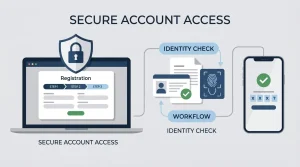
You identify the gambling sites or venues you want to exclude yourself from, verify your identity, choose a duration and receive confirmation. The businesses you exclude yourself from should refuse service; for online gambling, you can use GAMSTOP or contact an individual casino.
How do I return from self-exclusion?
For GAMSTOP, you must contact the scheme directly to request removal. A 24-hour cooling-off period applies after your identity is verified, and operators may take a further 24 to 48 hours to update your status.
How does GamStop benefit me?
GAMSTOP is free and blocks you from accessing existing accounts or opening new ones with participating UK online gambling operators. It lets you exclude yourself from multiple UK-licensed sites and apps through one scheme.
How long does it take for GamStop to become active after sign-up?
The 24-hour cooling-off period begins once your identity has been verified, and your exclusion remains active during that period.
How does a non-GamStop casino handle self-exclusion?
A casino outside GAMSTOP may not receive your exclusion information, so it may not block you as a participating UK operator would. You can request exclusion from an individual online casino through its Responsible Gambling page or by contacting customer services.
What self-exclusion options are available at non-GamStop casinos?
You can ask an individual casino to exclude you by following the instructions on its Responsible Gambling or Safer Gambling page, or by contacting customer services. A casino outside GAMSTOP may not apply the same protections as a participating UK-licensed operator.
Can a self-excluded player use a non-GamStop casino?
A non-GAMSTOP casino may not receive the information that you have self-excluded and might allow you to register or deposit. But your exclusion remains in force, and gambling elsewhere to get around it is not a safe workaround.
Material created by the team Prestige