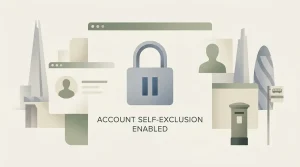


GamStop covers casinos under UK Gambling Commission jurisdiction; sites outside its network may lack that exclusion barrier, but the label proves nothing about safety.
What “bypassing GamStop” means in 2026
“Casinos that bypass GamStop” describes gambling sites that do not cooperate with the self-exclusion service. A player who registers with an establishment outside GamStop’s network may not be blocked by the exclusion there. That is the basic meaning of the phrase—not a promise that a site is safe, legitimate or suitable.
I’m not going to dress that up as a clever workaround. If you chose to exclude yourself, trying to get around that decision can remove a barrier you put in place for a reason. I’ve learned the hard way that a barrier is easiest to dismiss when you’re already looking for a way past it.
The important boundary is the regulator’s reach. GamStop applies to casinos operating under the UK Gambling Commission’s jurisdiction. It is tied to that system; it is not a universal block covering every gambling site a person might find online. A site that does not cooperate with GamStop can therefore sit outside the exclusion service, even though the words “not on GamStop” say nothing by themselves about the operator’s standards or protections.
If you’re considering a casino outside GamStop, use this list as a starting point and check whether gambling is safe for you. The only listed detail for these operators is their stated payout speed.
1. Chanze
Payout speed: 1-3 business days You can note the listed payout speed: 1–3 business days.
2. EvoSpin
Payout speed: 1-3 business days You can note the listed payout speed: 1–3 business days.
3. Zombillion
Payout speed: 1-3 business days You can note the listed payout speed: 1–3 business days.
4. SpinFormula
Payout speed: 1-3 business days You can note the listed payout speed: 1–3 business days.
5. Amunbet
Payout speed: 1-3 business days You can note the listed payout speed: 1–3 business days.
6. x3bet
Payout speed: 1-3 business days You can note the listed payout speed: 1–3 business days.
7. Revery Play
Payout speed: 1-3 business days You can note the listed payout speed: 1–3 business days.
8. WinBeast
Payout speed: 1-3 business days You can note the listed payout speed: 1–3 business days.
9. SlotoSport
Payout speed: 1-3 business days You can note the listed payout speed: 1–3 business days.
10. NightWin
Payout speed: 1-3 business days You can note the listed payout speed: 1–3 business days.
That distinction matters throughout this subject. The label describes a relationship with GamStop, not a quality mark. It does not tell you what rules apply to a site, what safeguards it offers, or what help is available if gambling becomes difficult to control. Those are separate questions, and the answers should not be inferred from the label.
If you are currently self-excluded, treat that status as a boundary, not a puzzle to solve. No sales pitch.
Online casinos outside GamStop: what the label means
“Not on GamStop” describes a relationship with the self-exclusion service, not a quality mark. It means a gambling site is not part of the system that checks whether a person has registered an exclusion. The phrase can sound like a neat category, but it tells you very little about the site itself.
GamStop is designed to stop registered users gambling with operators licensed by the UK Gambling Commission (UKGC). UKGC-licensed online casinos are required to take part. When a person registers, participating operators must apply that exclusion, rather than treating it as a preference they can ignore. In practice, the system links a person’s exclusion to the UK-licensed gambling sites covered by it.
That is the basic distinction. The service is not a universal switch covering every gambling website a person might encounter. A site may not appear in GamStop because it is outside the group of operators required to participate. If a casino does not use GamStop, the service cannot apply its exclusion there in the same way it does at a UKGC-licensed online casino.
Casino Licensing and Safety in the UK
I used to read “outside GamStop” as if it meant a site had somehow found a loophole in the service. That misses the point. The label is about whether the operator is connected to GamStop; it is not a special status awarded by GamStop, and it does not mean that a player’s registration has been cancelled or switched off. The exclusion still applies at participating operators.
This is also why “casinos not on GamStop” and “casinos that ignore GamStop” are not interchangeable descriptions. The first can simply mean the site is not in the system. The second suggests an operator is failing to follow a restriction that applies to it. UKGC-licensed operators have to participate, so a site’s absence from GamStop should not be read as a harmless variation in how a licensed UK casino handles exclusions.
A label alone cannot tell you what rules govern a site, what checks it makes, or what help it offers. Sites outside GamStop operate outside the UKGC framework and may not provide the protections that are mandatory for UKGC-licensed operators. Some may offer their own limits or exclusion tools, but their presence and operation cannot be assumed from the words “not on GamStop”. Different system. Different obligations.
That distinction matters if you are looking at an online casino not on GamStop while an exclusion is active. The phrase may describe why the site does not recognise the registration; it is not reassurance that using it is safe, or that your self-exclusion has ended. I know how tempting it is to treat a technical gap as permission. It isn’t. If you chose to exclude yourself, the point was to create distance from gambling, not to find a site that does not share the same check.
Attention: A label like "non-GamStop" describes a gap in coverage, not a quality mark or a recommendation of suitability.
It is worth being careful with labels such as “unrestricted” too. They can make a site sound more flexible, but they do not explain what restrictions apply or what happens if you need help. Nor does “not listed” mean “approved”. GamStop’s role is specific: it supports exclusion across participating operators. It is not a directory rating every gambling site or certifying the ones outside its system.
When you see “non-GamStop online casinos”, read it narrowly: these are sites that do not cooperate with the GamStop exclusion system. Do not infer more than that. It does not establish that a site is suitable, trustworthy, or equivalent to a UKGC-licensed casino. And if you are searching for the “best” casino sites not on GamStop, remember that a ranking can make the category look like an ordinary shopping choice. For someone who has registered with GamStop, the more important fact is that an active exclusion remains in force at the operators covered by it.
Trusted Casinos Not on GamStop UK: What to Check
The label explains a gap in coverage, not a recommendation. If you are already excluded, I would treat that as the line to respect, rather than as a puzzle to solve. Short version: not the same system.
Non-GamStop casinos and the limits of self-exclusion
“Non-GamStop” describes a gap in the exclusion system, not an extra setting within it. If a casino does not participate in GamStop, registering with the service will not block your account there. That distinction matters: an exclusion can work as intended across participating operators while leaving other gambling sites untouched.
GamStop is designed to prevent registered users from gambling with UK Gambling Commission-licensed operators. UK-licensed operators must take part. Casinos outside that framework are not bound by the same requirement to apply GamStop records, so the service cannot enforce a single restriction across every site a person might encounter.
That does not make an active exclusion less serious. GamStop exclusions are chosen for a set period, and the restriction cannot be shortened or cancelled before that period ends. If you signed up because gambling was causing harm, treating a site that does not recognise the block as a loophole can undo the separation you were trying to create. I would not mistake a gap in coverage for a change in the reason you set the restriction.
What protection may be missing
The practical difference is bigger than whether a login is blocked. GamStop is one part of a UK regulatory framework that sets consumer-protection expectations for licensed operators. A casino not on GamStop sits outside that framework, so you should not assume the same safeguards, complaint routes or requirements apply. Playing there is not itself a criminal offence for the player, but that does not give you the protections attached to a UKGC-regulated account.
Safer-gambling tools can vary. A specialist casino review has reported that some non-GamStop sites provide controls such as deposit or loss limits, session time limits and reality checks voluntarily, rather than because UKGC rules require them. A separate specialist review describes some overseas sites as offering deposit limits, self-exclusion and reminders even where their regulator does not require those features. These reports are not a guarantee that any particular site has the tools, that they work as expected, or that they cover every account and product.
Safer-gambling tools such as deposit limits, session time limits, and reality checks may be provided voluntarily by some offshore sites, but their presence cannot be assumed.
Even where a control is present, read what it actually does. A deposit limit may restrict money added to an account, for instance, without blocking access to other gambling sites. A session reminder can prompt you to pause, but it is not the same as preventing further play. A site-level self-exclusion may apply only to that operator; it should not be assumed to carry over to other casinos or connect to GamStop.
Small print matters. Check whether a limit takes effect immediately, how changes are handled, and whether self-exclusion covers all gambling products on the account. I would also look for a clear route to ask for help if a tool does not behave as described. If those details are hard to find, that is a reason to be cautious, not a reason to assume the setting will protect you.
A site tool is not the same as a system-wide block
There is a difference between choosing to exclude yourself from one operator and being blocked across the network of participating UKGC casinos. The first depends on the operator’s own process and the scope of its terms. The second is the purpose of GamStop within its remit. If you are relying on a broad barrier, a site’s own button may not provide it.
That is why the label “best non-GamStop casinos” can be misleading when the question is self-exclusion. A review may compare features, but a list cannot establish that an individual site will be a safe substitute for a restriction. No control on one account can recreate a system-wide exclusion if the operator does not take part in that system.
Casino Sites Not Registered with GamStop: UK Guide
If gambling feels difficult to control, adding a new account can make the boundary harder to maintain. You do not have to decide anything in a rush, and you do not need to test whether a site’s controls are strong enough by putting money into it. A pause is still a choice.
I have learned to distrust reassuring labels when they leave the scope unclear. “Responsible” can mean a visible reminder, a voluntary limit or a genuine block; those are not interchangeable. The useful question is not whether a casino advertises a tool, but what that tool covers and whether it supports the boundary you meant to set.
If you already have a GamStop exclusion, let it run for the period you selected rather than trying to route around it. If you need more support, seek help from services available to you in the UK instead of relying on an offshore operator’s account controls. The gap is real. So is the risk.
Can non-GamStop casinos accept UK players?
The phrase “accepting UK players” can make this sound like a simple question of whether a registration form lets you open an account. It is not. There are two different positions to separate: yours as a player, and the operator’s as a business.
A UK player does not commit a criminal offence simply by using an online casino that is not part of GamStop. But that does not make the casino’s offer lawful. If an operator provides online gambling to people in Great Britain, it must hold a licence from the UK Gambling Commission. An operator serving UK residents without that licence is acting illegally, even if its website accepts a UK address or the player can reach it.
Legal Risk
An operator offering gambling to UK residents without a UKGC licence is acting illegally, regardless of whether the site accepts a UK address.
That distinction matters. A site being accessible is not proof that it is authorised to serve you. Nor does “accepts UK players” mean that it has the same standing as a UK-licensed casino. The phrase describes what the operator permits in practice; it does not settle whether the operator is entitled to do so under British rules.
I used to treat a working sign-up page as a kind of green light. It isn’t. A business can make an offer that it is not legally entitled to make, and the fact that you can complete registration does not change the operator’s licensing obligations.
So, can a non-GamStop casino take a UK player? Some may allow UK residents to register or gamble. The player’s act of using such a site is not itself a criminal offence, but an operator offering gambling to UK residents without a UKGC licence is breaking the rules that apply to the business. Those statements can both be true at once.
That is not a recommendation to use one. It is also not a claim that an unlicensed site is safe, legitimate, or equivalent to a UK-licensed casino. If you are currently self-excluded, I would not treat the difference in legal responsibility as a reason to look for another place to gamble. The operator’s conduct and your own decision are separate questions; neither turns the site into a regulated UK option.
The short version: access is not authorisation. A UK player may not face criminal liability for using a non-GamStop casino, while the operator still needs a valid UKGC licence to offer online gambling to people in Great Britain.
Non-UK Casinos: What a UKGC Licence Means
Licensing outside the UK: what the jurisdiction tells you
A casino’s licence tells you which regulator is responsible for the operator in that jurisdiction. It does not, by itself, tell you that the casino is authorised to serve people in Britain. I used to treat a foreign licence badge as a sort of all-purpose approval. It isn’t.
Non-UK casinos may hold licences from places such as Malta, Gibraltar or Curacao. That can explain why a site describes itself as European or international, but the label is only a starting point. You still need to establish which company holds the licence, whether the licence is current, and whether it covers the site you are looking at. A badge in a footer is a claim, not proof.
The distinction matters for GamStop. The scheme sits within the UK Gambling Commission’s system. A casino licensed abroad is not required, simply because it has that overseas licence, to connect to GamStop. That does not mean a foreign licence gives an operator permission to offer online gambling to people in Britain. Remote operators selling into the British market need the relevant UKGC licence, regardless of where the business is based.
So “regulated” needs a subject attached to it: regulated by whom, and under which licence? A regulator may oversee an operator in its own jurisdiction without providing the UKGC framework or its consumer protections. The existence of a regulator is not evidence that its rules, enforcement or routes for redress match those in Britain. Don’t assume equivalence.
Do
- Use the regulator’s official database to check the operator
- Verify that the company name matches the site details
- Confirm if the licence is current
Don’t
- Rely on a footer badge as proof of licensing
- Assume a foreign licence allows the site to serve the UK
- Trust broad labels like “international” or “European”
How to check a licence claim
Start with the regulator’s official records rather than relying on a casino’s own wording or a review page. Find the regulator named in the claim and use its official database or register to check the operator’s details. Then compare the listed company and licence information with the details shown on the casino site. If the names do not line up, or you cannot confirm the claim, treat that uncertainty seriously.
The key is to verify the specific operator, not just recognise the jurisdiction’s name. A site might mention Malta, Gibraltar or Curacao prominently, while the wording leaves unclear which legal entity runs the gambling service. The regulator’s records are where you should test that claim. A polished logo does not settle it. Neither does a page saying “licensed”.
I also wouldn’t read “international” as a regulatory category. It says little about which authority supervises the operator, what rules apply, or whether the site has a UKGC licence. The same goes for broad phrases such as “European casino”. They can describe a location or marketing identity, but they are not a substitute for checking the actual licence.
A Curacao or European licence can therefore be relevant information, but it cannot make a site equivalent to a UK-licensed casino. If an operator accepts customers in Britain without the required UKGC authorisation, an overseas regulator’s licence does not cure that problem. The casino remains outside the UKGC system, and the consumer protections associated with a UKGC licence are not available through that foreign licence.
This is where I’d slow down, not speed up. I’d look for the regulator’s own record and compare it with the casino’s stated operator. If the information is hard to verify, vague, or inconsistent, I wouldn’t treat the uncertainty as a small technicality. It is the main thing you know about the claim.
Playing on a site that is not part of GamStop is not itself a criminal offence for the player. But that fact should not be mistaken for an endorsement or a sign that the operator is properly authorised to serve Britain. The legal position for operators is different: a business offering remote gambling to British customers must hold the relevant UKGC licence. A foreign licence does not replace it.
Jurisdiction names can help you ask the right question. They cannot answer it for you. Check the regulator, check the operator, and keep the UKGC requirement separate from whatever overseas licence the site advertises.
European and Curacao casinos: check the actual licence
“European” sounds reassuring, but it is a broad label, not a regulator. A casino described as European might point to a licence from Malta or Gibraltar; another site may use “European” loosely without making the issuing authority clear. Curacao is a separate jurisdiction, and a Curacao licence is not interchangeable with a European one.
The location named in a site’s marketing tells you little by itself. I’ve learned to look for the actual regulator and the licence details, rather than treating a flag, badge or line of small print as proof. If the site does not identify who issued its licence, that is a reason to pause. If it does, check the information against that regulator’s official records. A logo on a casino page is not the same thing as an independently confirmed licence.
Attention: A foreign licence does not make a site equivalent to a UKGC-licensed casino, nor does it authorise an operator to serve customers in Great Britain.
That still does not make the site equivalent to a UKGC-licensed casino. Operators outside the UK Gambling Commission’s system are not required to connect to GamStop, and they do not share its exclusion data. So a player who has registered with GamStop may find that a site licensed elsewhere does not recognise that restriction. That is a gap in protection, not a feature I’d treat as a way around an active exclusion.
There is another distinction worth keeping clear: a foreign licence does not, by itself, authorise an operator to serve customers in Great Britain. The regulator named on a site and the UK rules for operators offering gambling to British customers are separate matters. A licence from Malta, Gibraltar or Curacao should not be read as a UKGC licence.
I would also avoid assuming that different regulators require the same safeguards. A casino outside the UKGC framework may lack mandatory UK responsible-gambling tools, and access to UK-based support services may not be available. Even if a site lists limits or self-exclusion options, their presence does not establish that the wider protections match those at a UK-licensed operator.
The practical test is fairly plain: identify the regulator, verify the licence through its own official database, and check that the details correspond to the operator behind the website. If you cannot confirm that, the jurisdiction label is just a label. And if you are currently self-excluded, don’t use a foreign licence as a reason to gamble elsewhere.
Non-Gamban Casinos in the UK: What It Means
Offshore routes around GamStop—and why not to use them
The routes people describe are not all the same. One is simply registering with a gambling site that does not cooperate with GamStop. That may sound like a technical distinction, but the practical point is blunt: an active exclusion will not protect you there in the way it does at participating sites. Searching for offshore casinos not on GamStop can make this sound like a workaround with no consequences. It is still a way of trying to gamble during a restriction you chose for a reason.
Other methods are sometimes mentioned, but they should not be mistaken for dependable or harmless options. The site neconnected.co.uk has reported that people may use cryptocurrency gambling services that do not ask for registration or client-data checks. It has also described attempts to register using another person’s details, or to use anonymising tools such as a VPN, proxy or TOR browser. Those are reports of possible methods, not a guarantee that any particular site will accept them or that they will work.
Using someone else’s personal information crosses a serious line. Anonymising tools do not change an operator’s rules or make an account legitimate. And a service that asks for little information at the start may still raise questions later. A quick sign-up is not a reliable way to avoid checks or trouble.
I understand the pull of the phrase “a way around it”. It makes an impulse sound like a plan. But if you chose self-exclusion because gambling had become difficult to control, trying to get past it can undo the barrier you put in place. I would not recommend searching for an offshore non-GamStop casino, using another person’s details, or trying to mask where you are to gamble.
If you are looking at these routes because the urge is strong, pause before creating an account or sending money. The exclusion is there to create distance at the moment when distance can matter. Don’t turn that pause into a workaround.
Critical Warning
Using another person’s personal information to bypass restrictions crosses a serious line and does not make an account legitimate.
Casinos outside GamStop are not the only alternative
When you’re looking for casinos outside GamStop, it can feel as if the only choice is to find another online site. It isn’t. There is also the option of stepping away from online gambling and, if you have self-excluded, waiting until the period you selected has run its course. Neither option should be treated as a trick for getting round a restriction.
A land-based gambling venue is sometimes presented as an alternative to online play. But if you registered with GamStop because you wanted a break from gambling, changing the setting doesn’t remove the reason you chose to self-exclude. I’ve learned to be wary of anything described as a “workaround”: it makes a risky choice sound like a practical solution. A different venue may feel different in the moment, but it does not make an active exclusion less meaningful.
The more straightforward route is to let the exclusion period finish. GamStop offers choices spanning six months, a year or five years. Once you have selected a period, you cannot shorten it or cancel the self-exclusion early. That can be frustrating if your circumstances change, but it is the point of making the decision in advance: a difficult day or a sudden urge cannot simply undo it.
Waiting is not the same as deciding that you must gamble again when the restriction ends. It only means allowing the boundary you set to stay in place for the time you chose. You can use the interval to consider what you want from gambling, whether it has been affecting your finances or relationships, and what support would help you keep control. There is no need to plan a return date or line up a casino in advance.
If the selected period has ended and you are thinking about gambling again, pause before treating access as a reason to play. You can choose not to return. If you do feel pulled towards gambling despite wanting to stop, seeking support is a better next step than searching for a casino outside GamStop UK or moving between online and land-based options. An active exclusion cannot be cancelled early, and trying to sidestep it can undermine the boundary you set for yourself.
No clever shortcut.
Reading non-GamStop casino reviews—and the bonus small print
A glowing review can make a welcome offer look like free money. I’ve learned to read past the headline: the bonus is only useful if its rules are clear and you can meet them without changing how you play.
Start with the wagering requirement. It tells you how much qualifying play is required before bonus funds, or winnings linked to them, can be withdrawn. A specialist review source describes the industry range as roughly 30x to 40x and treats requirements above 50x as potentially predatory. That is a useful warning sign, not a guarantee that a lower figure is fair. Check what the multiplier applies to: the bonus alone, or the bonus plus your deposit. The difference can be substantial.
Then look at which games count. Slots may contribute fully, while table games can count at a lower rate or not count at all. So a requirement that looks manageable on paper may take much longer if you prefer blackjack or roulette. I once skimmed a bonus summary and missed that detail. The headline was clear; the practical value wasn’t.
Bonus Terms Check
- Check the wagering requirement multiplier
- Verify if the multiplier applies to the bonus only or bonus plus deposit
- Confirm which games contribute to the wagering
- Check for maximum bet limits during wagering
- Note the deadline to complete the requirements
- Check for withdrawal caps on bonus winnings
The terms may also set a maximum bet while wagering is active, a deadline to complete the requirement, or a cap on withdrawals from bonus winnings. A specialist review source identifies these as restrictions worth checking, but the operator’s own terms are what govern the offer. Read them before opting in, especially if the review gives only a short summary. “Flexible” can mean plenty of conditions.
Look for the order of play, too: whether you must accept the bonus before depositing, whether it expires, and what happens if you withdraw before completing the wagering. If the wording is unclear, treat that as a reason to pause rather than assume the more favourable interpretation.
I don’t judge a bonus by its advertised size now. I check the calculation, game contribution, bet rule, deadline and withdrawal cap together. If a review leaves those out, it has not given you enough to decide. Fine print matters.
Before you deposit: verification, withdrawals, and practical risks
A review can make the payment section look like a footnote. I’ve learned to treat it as part of the decision, not something to check after a win. On a site that is not part of GamStop, the account and payment terms deserve extra scrutiny: the operator sits outside the UK Gambling Commission’s framework, so you should not assume UKGC-mandated protections or tools are in place. Access to UK-based support services may also be unavailable.
Get verification out of the way
A specialist casino review advises completing KYC checks early to reduce the chance of a withdrawal being held up later. That is practical advice, not a promise that verification will be quick or that a payout will be approved. Read the operator’s own requirements before depositing and make sure you understand what it asks you to provide and how it handles the process.
Online casino Malta MGA licence in the UK: what to check
I would not rely on a review’s “easy withdrawals” label. It can tell you very little about the checks that happen when you request your money. If the verification process is unclear, or the terms do not explain how withdrawals are handled, that uncertainty is a real risk—not a minor detail to sort out later.
Check the route and timing of a withdrawal
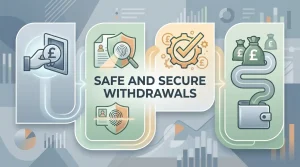
The payment method can affect how long a withdrawal takes. A specialist review reports that e-wallet withdrawals can be faster than card withdrawals, while casino processing may take up to 24 hours. That is not a guaranteed timetable: processing by the casino and the time taken by a payment provider are separate parts of the journey. Read the stated terms rather than treating a review’s estimate as a commitment.
Also check whether the casino puts conditions on withdrawals, and whether the method you use to deposit is the same one the operator expects for payouts. If you cannot find a clear explanation, do not assume the money will arrive on the schedule you have in mind. Slow or disputed withdrawals can leave you with little practical recourse outside the UKGC system.
Treat cryptocurrency as a separate risk
A specialist casino review notes that cryptocurrency withdrawals may be fast, but the value of the funds can change with the market. A payout’s value when received may not be the same by the time you convert or spend it. Speed does not remove that volatility.
Transfers also carry a more basic danger: cryptocurrency payments are irreversible. If you enter the wrong wallet address, the funds may be permanently lost; there may be no way to cancel the transfer or recover them. Check the address carefully before confirming, and do not send money unless you understand that risk.
I’ve made the mistake of focusing on how quickly a payment might arrive and ignoring what could go wrong on the way. Here, “instant” only describes one part of the process. It does not make an offshore account safer, guarantee a withdrawal, or replace the protections and support available within the UKGC framework.
Are casinos that bypass GamStop illegal for UK players to use?
No, using a non-GamStop casino is not a criminal offence for you. However, an operator offering gambling services to UK residents without a UK Gambling Commission licence is acting illegally.
How can players get around Gamstop?
If you have self-excluded, don’t try to get around it; the exclusion cannot be cancelled early. You can wait until the selected period ends before unsubscribing.
What exactly does GamStop block?
GamStop blocks registered users from gambling with participating operators licensed by the UK Gambling Commission. It does not cover every gambling site online.
What gambling sites are not on Gamstop?
Sites outside the GamStop system include casinos licensed outside the UK, such as in Malta, Gibraltar or Curacao. They are not required to integrate with GamStop, but that does not mean they are approved or offer the same protections as UKGC-licensed operators.
Is it safe to play at non-GamStop gambling sites?
You cannot assume a non-GamStop site is safe: the label says nothing about its standards, and it may not provide the protections required of UKGC-licensed operators. Check what licence and safeguards the site offers, and remember that these protections may be voluntary.
Is it legal to play in casinos not blocked by Game Stop?
Yes, playing at a non-GamStop casino is not a criminal offence for you. But an operator offering services to UK residents without a UKGC licence is acting illegally.
What’s the fastest way to get my winnings out?
E-wallets are generally faster than card withdrawals, and casino processing can take up to 24 hours. Completing KYC verification early can help avoid delays; cryptocurrency withdrawals may be fast, but the value can change with the price.
Can I reverse a self-exclusion from GamStop early?
No, you cannot shorten or cancel a GamStop exclusion before the selected period ends. You can unsubscribe once that period has finished.
Material created by the team Prestige