
A UK licence is a regulatory baseline, while enforcement records, offers, apps and payment methods each call for separate checks.
What a UK Casino Licence Actually Tells You
When I see a casino described as “trusted”, I try to get past the adjective and establish what it actually tells me. For a site offering real-money gambling to people in England, Scotland or Wales, the starting point is whether the operator holds the relevant UK Gambling Commission licence, often called a UKGC Licence. That is not a claim that a site is enjoyable or that every part of its service will suit you. It is the regulatory baseline for offering remote gambling to consumers in Great Britain.
The Gambling Commission regulates remote gambling offered to people in Great Britain. The important detail is who the service is being offered to, not simply where the company has an office, is incorporated or runs its business. A business based abroad does not avoid the British licensing requirement by being outside the country. If it offers remote gambling facilities to consumers here, it needs the relevant UKGC Licence.
Gibraltar Casino Licence and UK Regulation Explained
That distinction can sound obvious until a site’s branding, ownership and location are all presented as if they answer the same question. They do not. A company can be registered in one place, operate from another and have a website aimed at British customers. For the licensing question, the company’s address does not replace the question of whether it is licensed to serve this market.
I used to give too much weight to the polished surface: a familiar-looking website, confident wording and a page full of claims about being “safe”. None of those things tells you which regulator has authority over the gambling service. The licence requirement does. It is the first filter, not the whole verdict.
What the licence is about
A UKGC Licence is relevant because of the operator’s activity: providing remote gambling to consumers in Great Britain. It is not a general endorsement of every sentence in the site’s advertising, nor a promise that every customer will have a perfect experience. Treat “trusted” as a description someone has chosen to use, not as a regulatory status.
Non-UK-Regulated Casinos: What Players Should Know
That matters when a casino calls itself the best or most trusted. Those labels can make a recommendation sound settled, even when they tell you nothing about the operator’s licensing position. A site’s location, design or popularity cannot stand in for the required licence either. If an operator is offering real-money gambling to customers in England, Scotland or Wales, the relevant question is whether it holds the UK Gambling Commission licence required for that activity.
I find it useful to keep the claim narrow. A licence tells you that the operator is within the regulator’s licensing framework for the relevant market. It does not, by itself, answer every practical question you might have about a particular site. That is why I would not treat the word “licensed” as a shortcut to “everything here is right for me”. It establishes a baseline. It does not make the decision for you.
Great Britain is the boundary
The wording “Great Britain” is deliberate. The Gambling Commission’s remit for remote gambling covers consumers in England, Scotland and Wales. Northern Ireland is not covered by that UKGC remote-gambling regime in the same way. So, when a page talks loosely about a licence applying to the whole UK, pause and check what territory it means. The distinction matters because the regulator’s remit is not identical across all parts of the United Kingdom.
This is also why broad claims about a “UK casino” can blur an important point. A site may use UK-wide language in its branding, but the licensing question for remote gambling is tied to the market and jurisdiction being discussed. For consumers in Great Britain, the UK Gambling Commission is the regulator to understand. A business cannot make the requirement disappear by being headquartered elsewhere or by using a different description for itself.
The licence is the start. Not the finish.
If you are trying to judge whether an online casino is trustworthy, begin with the regulatory question rather than the marketing language. Is the operator offering remote real-money gambling to consumers in Great Britain? If so, it needs the relevant UKGC Licence regardless of where it is based. That is a clear rule, and it cuts through a lot of distracting detail.
Attention: A UKGC Licence is a regulatory baseline, not a guarantee that every part of a casino’s service will suit you or that every experience will be perfect.
It also keeps the word “trusted” in proportion. A licence is meaningful because it places the operator within the applicable British regulatory system; it is not a magic stamp that removes the need to think. I would rather start from that concrete requirement than let a confident slogan do the work. The company’s location may explain where it is based. It does not settle whether it is entitled to offer remote gambling to people here.
Real-Money Play Starts With Checks and Limits
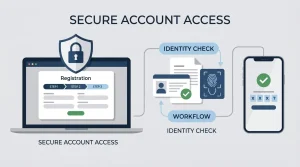
A “quick sign-up” can make the checks feel like an annoying detour. I used to treat them that way, then found myself trying to sort out account details at the point I wanted to withdraw. It is less stressful to understand what the operator will ask for before putting money in.
Under UK rules, an online gambling operator must verify you before you can deposit or play. That is not a box you can sensibly leave until later. Age checks are part of the process too: gambling online is for adults aged 18 and over. If the account cannot be verified, you may not be able to use it as planned.
Have your details ready
Identity checks are about confirming that you are who you say you are and that the details on the account match your documents. The usual request is a photo of a passport or driving licence, alongside a recent utility bill as proof of address. The operator may explain how to upload these through the account.
Non-UK Casinos: What a UKGC Licence Means
I would enter my personal details carefully before sending anything. A small mismatch between the account form and a document can turn a straightforward check into a back-and-forth. Make sure the photos are clear and that the information can be read; keep to the operator’s instructions rather than sending extra personal material it has not requested.
There can also be identity or payment-ownership questions as the operator reviews an account. If a request is unclear, check the account messages or contact the operator through its stated support channel before trying again. Guessing what a form means, or repeatedly submitting a document that has already been rejected, rarely makes the issue clearer.
The point is not to make the process sound dramatic. It is simply better to know that the checks come before play, not assume you can deposit first and deal with them only if a withdrawal is due.
Set a limit before the first deposit
New customers must be prompted to set a financial limit before making their first deposit, and account-level limit controls must be accessible. Take that prompt seriously. A limit is useful only if it reflects what you can afford to lose, not what you hope to win back.
I have made the mistake of treating a limit as a formality: choose something that gets the screen out of the way, then carry on. That misses the purpose. Think about the money you are prepared to spend on gambling, and set a boundary before the session begins. Do not count on a future win to make the amount affordable.
Do
- Set a boundary based on what you can afford to lose
- Use account controls to review or change your limit
Don’t
- Treat a financial limit as a mere formality
- Count on future wins to make a spend affordable
Look through the account controls as well as the initial prompt. You should be able to find where to review or change your limit, rather than having to hunt for it when you are already frustrated or caught up in play. Limits give you a practical way to put a ceiling on activity; they are not a promise that gambling will stay harmless or that you will get money back.
Changes do not all work the same way
If you reduce a limit, the lower limit applies immediately. That makes a reduction a useful action when your current boundary no longer feels right: you do not have to wait for a later date for the smaller amount to take effect.
Increasing a limit is different. It carries a standard cooling-off delay, so the change does not take effect straight away. That pause is deliberate space to reconsider the decision, not a technical obstacle to work around. If you have just felt tempted to raise your limit, leave the request alone while you think it through.
Before confirming a change, read the wording on the screen and check which limit you are changing. Account controls can cover different aspects of gambling activity, and a change to one setting should not be mistaken for a change to every setting. If the labels are unclear, ask support to explain them rather than assuming.
Keep it simple. Know the boundary.
VPN-Friendly Casinos in the UK: What to Know
A trusted real-money casino is not established by a reassuring sign-up page or a welcome offer. For your own account, the useful test is more ordinary: can you complete the required identity checks, understand what the operator needs from you, and find controls that let you set and reduce a financial limit? Those details are not a substitute for checking who runs a site, but they shape what happens once you start using an account.
If you are struggling to keep gambling within the limits you set, stop and seek support rather than raising the boundary to chase losses. The National Gambling Helpline is available around the clock on 0808 8020 133.
Reading a Casino Site’s Regulatory Footprint
A UKGC logo in a website footer is easy to copy into your mental picture of a “trusted” casino. I used to treat it as a shortcut: see the badge, assume the business behind the page had been checked. That skips the useful bit. The public register can help you connect the domain you are looking at with the company named as its operator.
Think of it as matching two labels, not collecting a badge. One register entry identifies a website address; another identifies the operator and its account. When those details line up, you have a clearer answer to a basic question: who is responsible for this site?
Follow the domain to the operator
The Gambling Commission’s public register lists leovegas.co.uk as an active UK-facing domain under operator account 39198. Its operator listing identifies LeoVegas Gaming PLC with that same account number.
Identifying the Operator
Search the domain
Find the website address (e.g., leovegas.co.uk) in the Gambling Commission’s public register to find the associated operator account number.
Verify the account
Match that account number (e.g., 39198) with the operator’s listing to confirm the legal company name.
Confirm the link
Ensure the domain and the company are tied by the same account number to establish who is responsible for the site.
That shared number is the useful link. The domain entry points from the address a customer recognises to the operator record; the operator entry gives the company name associated with it. If you are checking a different casino, look for the same kind of connection rather than assuming that a familiar brand name, a matching colour scheme or a polished page proves who runs it.
I find it helps to start with the exact web address, including its ending. A company can use more than one domain, and a name on a homepage may not be the legal name shown in a regulator’s records. Then compare the operator name and account details in the relevant register entry. Read the entries together. A domain by itself is not the whole story, and a company name by itself may not tell you which site it operates.
The LeoVegas example shows what a joined-up record looks like: a domain entry and a company entry tied by the same account number. It does not turn a register check into a guarantee about every part of a customer’s experience. It does give you a concrete identity trail instead of asking you to take a site’s own wording on trust.
That distinction matters when a site describes itself as “trusted”. The word is not a regulatory field, and it does not tell you whether the brand on the page matches the company responsible for it. A review site can help you notice details worth checking, but its description is not the same thing as a public register entry. I have been drawn in by confident language before. It sounded reassuring. It wasn’t evidence.
Merkur casino online UK: slots, licences and offers
What to do when the names differ
A difference in wording is not automatically proof of a problem: a trading brand and a company name can look different. The point is to find a clear link in the regulator’s records, not to demand that every label be identical. If you cannot establish that connection, pause before treating the site as verified. Recheck the spelling of the domain and the company name; a small difference can send you to the wrong record.
Also pay attention to what the record actually says. A domain being listed is not the same as a broad endorsement of the brand, its promotions or its customer service. It answers a narrower question about the relationship between an online address and an operator. That is still useful. It replaces guesswork with something you can inspect.
When comparing trusted casino sites in the UK, I would rather see a traceable operator-domain relationship than another string of reassuring adjectives. The public register gives you a way to test that relationship, using the account number as a cross-check. It is a small habit, but it changes the question from “Does this page look legitimate?” to “Can I identify the operator behind this address?”
That is a better starting point. Not a promise.
‘Best’ Is Not the Same as Safest
When choosing a UK casino, you should check the practical details that matter to you before signing up. This list gives you one stated detail to consider for each operator: its payout speed.
1. Chanze
Payout speed: 1-3 business days Chanze lists a payout speed of 1–3 business days. You can use that timeframe as one point to consider when assessing whether it suits you.
2. EvoSpin
Payout speed: 1-3 business days EvoSpin lists a payout speed of 1–3 business days. You can consider this stated timeframe when deciding whether it fits your expectations.
3. Zombillion
Payout speed: 1-3 business days Zombillion lists a payout speed of 1–3 business days. This gives you a stated timeframe to factor into your choice.
4. SpinFormula
Payout speed: 1-3 business days SpinFormula lists a payout speed of 1–3 business days. You can take this stated timeframe into account when considering the operator.
5. Amunbet
Payout speed: 1-3 business days Amunbet lists a payout speed of 1–3 business days. You have this timeframe as a practical detail to consider.
6. x3bet
Payout speed: 1-3 business days x3bet lists a payout speed of 1–3 business days. You can use this stated timeframe as part of your assessment.
7. Revery Play
Payout speed: 1-3 business days Revery Play lists a payout speed of 1–3 business days. This is a stated detail you can consider when deciding whether it suits you.
8. WinBeast
Payout speed: 1-3 business days WinBeast lists a payout speed of 1–3 business days. You can factor this timeframe into your choice.
9. SlotoSport
Payout speed: 1-3 business days SlotoSport lists a payout speed of 1–3 business days. You can consider this stated timeframe as one aspect of the operator.
10. NightWin
Payout speed: 1-3 business days NightWin lists a payout speed of 1–3 business days. This gives you a stated timeframe to consider when assessing whether it meets your needs.
A “best” badge can mean a site paid for a place on a page, scored well against an editor’s chosen checklist, or simply offers a deal that looks generous. It does not, by itself, tell you whether the operator is trustworthy. I’ve learned that the hard way: a polished ranking can make a choice feel settled before you’ve checked what actually matters.
So I treat “best” as a starting point, not a verdict. Ask what the label is based on. Does it explain how the operator was assessed, and does it distinguish advertising from independent evaluation? If the reasoning is vague, the badge is decoration. A confident tone is not evidence.
The same goes for games. A familiar title or attractive design can make a casino feel established, but the game itself cannot prove that the site is safe to use. Keep the operator and the product separate in your mind. One is responsible for your account and the way it treats you; the other is what you play.
Online Slot Stake Limits
Stakes are capped at £5 per spin for players aged 25 and over, and £2 for those aged 18 to 24.
There are practical rules that shape the experience, too. A specialist review reports that online slot stakes are capped at £5 per spin for players aged 25 and over, and £2 for those aged 18 to 24. That difference may affect how quickly a session moves, but it is not a trust rating. A site being subject to a stake limit does not make every other part of the experience good.
Promotions deserve the same clear-eyed approach. Casinos must give customers more control over the kinds of promotions they receive and the channels used to send them. That matters because “exclusive” can sound like a perk while still bringing a stream of messages you do not want. Look for controls that let you choose what reaches you, rather than assuming that accepting one offer means agreeing to every type of promotion.
I used to read a bold “trusted” claim as reassurance. Now I look for something concrete behind it: a clear explanation of the assessment, meaningful choices around marketing, and a site that does not rely on a badge to do all the talking. If a page only repeats “best” and “trusted” without showing its working, I give the wording very little weight.
There is no single label that settles the question. The useful test is whether the claims help you understand what you are signing up for, and whether the details hold together when you look past the headline. Marketing is easy. Evidence takes more than a badge.
Crypto Casinos: Check the Licence Before the Coin
A casino that puts Bitcoin or Dogecoin in its name can make the payment method feel like the main question. I understand the pull: a coin logo looks like a clear promise about how the site works. But it tells you nothing by itself about whether the business is permitted to offer remote gambling to people in Great Britain. The first check is still the operator’s UKGC Licence.
The rule turns on who the gambling is offered to, not where the business has its office. A remote gambling business providing facilities to consumers in Great Britain needs the relevant UK Gambling Commission licence even if it is based abroad. Calling the site a crypto casino does not create a separate licensing category or remove that requirement.
Licensing Requirement
A remote gambling business offering facilities to consumers in Great Britain must hold a UKGC Licence, regardless of whether it is a crypto casino or where it is based.
That is the part I would keep in front of me when looking at a site that advertises Bitcoin deposits, Dogecoin payments, or some other digital coin. A payment method and permission to provide gambling are different things. A site may talk at length about coins while saying very little, in the same prominent way, about its UK regulatory position. Don’t let the payment branding answer a question it cannot answer.
Separate the coin from the casino
I used to treat a slick page and a long list of payment options as signs that a site had its basics in order. They aren’t. A polished design can explain how an operator wants to be seen; it does not establish that the operator holds the licence required for Great Britain. Nor does the fact that a site accepts customers or has an international profile settle the question.
Start with the business behind the gambling offer. The relevant point is whether the remote operator serving Great Britain has the required UKGC Licence. Its location does not make the requirement disappear. If a site’s terms or footer mention an overseas company, that is not, on its own, proof that it is authorised to provide gambling to local consumers. Equally, the word “crypto” is not a shortcut to a conclusion either way.
Curacao Casino Licence in the UK: What It Means
I’d also avoid treating a coin logo, a wallet button, or a claim about fast transactions as a trust mark. Those details describe a payment experience, not the regulator’s relationship with the gambling business. You can be interested in how a site handles a coin and still put the licensing question first. One check at a time.
This matters because “trusted” is a label operators and reviewers can use loosely. For me, it only becomes useful when it points to something I can verify. A promise about privacy, a bold security badge, or a confident claim that a casino serves players worldwide does not replace the relevant licence. The question is not whether the site looks established; it is whether the remote gambling business offering facilities to consumers in Great Britain is covered by the required UKGC Licence.
What the licence question does—and doesn’t—settle
A licence check is a starting point, not a guarantee that every detail of a gambling experience will suit you. It does, however, address a more basic issue than the coin choice: whether the business is licensed to provide remote gambling in this market. That distinction is easy to lose when a page leads with Bitcoin or Dogecoin and makes the regulatory information harder to notice.
I wouldn’t infer that a casino is trustworthy simply because it accepts a familiar cryptocurrency. I also wouldn’t assume that an overseas base excuses the operator from the Great Britain requirement. The rule applies regardless of where that business is based when it offers remote gambling facilities to consumers here. That is the central test, whether the site calls itself a Bitcoin casino, a Dogecoin casino, or just an online casino with coin payments.
Licence First
Establish whether the operator has the required licence to serve Great Britain before deciding if the available payment methods are relevant.
This is not a claim that any particular crypto-branded casino has been checked or approved. A name, slogan, or payment list cannot establish that. Treat each operator’s status as its own question, and don’t turn a broad category into an endorsement. No coin symbol can do that work for you.
When I’m weighing a crypto-branded offer, I mentally move the payment method down the page. First, identify the operator and establish whether it has the licence required to serve Great Britain. Then you can decide whether the available payment route is relevant to you. Reversing that order is how an attractive deposit option can distract from the more important question.
So if you came looking for a trusted Bitcoin or Dogecoin casino, keep the wording practical: “trusted” has to mean more than a coin being accepted or a site looking convincing. The operator must meet the Great Britain licensing requirement for remote gambling offered to consumers here. The coin is secondary. The licence comes first.
What Enforcement Records Can—and Can’t—Show
I used to treat a regulator’s penalty as a neat verdict: bad operator, case closed. It isn’t. An enforcement record tells you that the Gambling Commission took action over particular conduct at a particular time. It does not, by itself, tell you whether a business holds a current UKGC Licence today, or settle every question about the site you are looking at.
Non-UKGC Licensed Casinos: Rules and Risks
One concrete example is Grace Media. On 26 June 2025, the Gambling Commission announced a £60,000 penalty after finding failings connected with self-exclusion and consent for direct electronic marketing. That is worth taking seriously: those issues affect whether someone who has excluded themselves is protected and whether marketing is sent with permission. But the record describes specified breaches; it is not a live status check. Keep those two checks separate.
The same care applies when a register search turns up nothing. A dated check of the public Gambling Commission register on 26 September 2026 did not show a LuckyPays entry under that brand or its stated domain, luckypays.io. A separate register check dated 25 September 2026 found no operating-licence entry for either Usoftgaming N.V. or Hustles Casino. Those are specific findings from searches made on those dates, not permanent descriptions. A register can change, and a brand name may not be the legal name of the operator.
That last point is where I have tripped myself up: searching only the name on a banner and assuming the result tells the whole story. Match the site’s stated operator and domain against the public register, then read what the entry actually identifies. If the names do not line up, do not fill the gap with a confident guess. Pause and establish who is responsible for the site and whether the relevant current entry exists.
A missing result deserves attention, but it is not proof of why the result is missing. Nor does a past penalty automatically mean that a company is unlicensed now. These records answer different questions: enforcement is about action over conduct; the register is where you check licensing information. Don’t swap one for the other.
Example Enforcement Records
On 26 June 2025, Grace Media received a £60,000 penalty for failings regarding self-exclusion and direct electronic marketing consent.
I still look at enforcement history when judging whether I trust a casino. I just no longer let one headline do the checking for me. Keep the dates attached to the findings, verify the present register position, and treat anything you cannot match as unresolved rather than reassuring. No shortcuts.
Reviews and Free Spins: Read the Conditions, Not the Hype
A review calling an offer “generous” has not told you much. I look for the terms that decide whether the headline can turn into something usable: who qualifies, what you must stake, which games count, and when the offer disappears. If those details are buried or unclear, the big number is doing the talking for the small print.
Start with eligibility. A specialist review of welcome deals reports that they are commonly reserved for new customers, restricted to one offer per household, and sometimes unavailable if you deposit using certain methods, including some e-wallets. Treat those as conditions to verify against the casino’s own terms, not as universal rules. If you have used the site before, or someone in your household has claimed an offer, check before depositing. A bonus that you cannot claim is just decoration.
Next, translate wagering into stakes. A specialist review gives this calculation: a £20 bonus with a 10x wagering requirement means £200 in total bets before the requirement is met. That is turnover, not a promise that you will have £200 left, or that you will withdraw a particular amount. I used to see a multiplier and think it was a small hurdle. It isn’t. The size of the bonus alone tells you almost nothing.
Anjouan Casino Licence UK: What Players Should Know
Game contribution changes the calculation too. One specialist review reports that slots count their full stake towards wagering, while live tables and blackjack can count at a reduced rate or not count at all. Read the game list and contribution table before you play: choosing a game that contributes less can leave more wagering unfinished than you expected. Check for excluded games as well.
Then look for an expiry date. A specialist review describes bonus funds and free spins as commonly carrying a fixed window, with periods reported from 7 to 30 days. The exact deadline belongs to the offer you are considering, so check when the clock starts and what must be completed before it runs out. A short window can matter more than an extra spin.
Free spins have their own details: which game they apply to, whether winnings become bonus funds, and what wagering applies to those winnings. “Free” describes the entry cost, not necessarily the path to withdrawable cash. That distinction is easy to miss.
I now read reviews as signposts, not verdicts. A useful review explains the conditions and points you to the operator’s full terms; then compare those terms with the offer shown in your account. If the headline and the rules seem to describe different deals, trust the rules. No gloss.
Reviewing Bonus Terms
- Check if you are a new customer and eligible for the offer
- Calculate the total wagering requirement (Bonus × Multiplier)
- Verify which games contribute fully or partially to wagering
- Note the expiry date for bonus funds and free spins
Casino Apps Still Need the Same Safety Checks
An app can feel more trustworthy than a web page because it sits on your phone and has a polished icon. I’ve made that mistake: a tidy interface tells you nothing about who runs the gambling account behind it. The same safeguards matter whether you open a casino in a browser or through an app.
For real-money play in Great Britain, the operator needs a UKGC Licence. Check the company behind the app, not just its name or the developer label in an app store. If those identities do not line up, pause and work out who is actually providing the gambling service before you sign up.
One protection worth checking is GAMSTOP. Online operators in the Gambling Commission’s Great Britain regime are required to participate in the national self-exclusion scheme. That requirement became compulsory on 31 March 2020. The point is that self-exclusion should not depend on whether you happen to be using an app or a website: the operator’s channel does not remove the requirement.
Trusted Casinos Not on GamStop UK: What to Check
I would also look for responsible-gambling controls inside the account, rather than assuming the app’s settings cover them. Phone-level screen limits and casino account safeguards are different things. If the app makes it hard to find the operator’s identity, self-exclusion information or account controls, that is a reason to slow down—not proof, by itself, that the operator is unlicensed.
And don’t treat an app’s presence in an official store as a substitute for checking the gambling business. An app can be a convenient front end; it is not the licence. I’ve learned to separate those two things the annoying way. Check first.
If you have excluded yourself through GAMSTOP, do not try to get around that choice by switching from an app to a browser or looking for another route into gambling. If gambling is causing you harm, the National Gambling Helpline is available around the clock on 0808 8020 133. Apps do not change the underlying protections—or the need to take them seriously.
Live Tables and E-Wallets: Know What You’re Checking
A live table can feel more immediate than a slot, but the cash-out still has to pass through the operator’s process and the payment provider’s. When I compare casinos with live dealers or e-wallet withdrawals, I look for the withdrawal terms, not just a payment logo on the deposit page. Deposit and withdrawal availability are separate.
The first withdrawal can take longer than later ones because the operator may need to complete identity or payment-ownership questions. That can mean providing photo ID and proof of address before funds are released. A specialist review reports an additional 12–24 hours for first-withdrawal document checks. Treat that as a stated estimate, not a promise that every operator follows the same schedule.
PayPal can be quicker once a withdrawal has been approved, but the timing still depends on the day. A specialist review gives a guide of 4–6 hours on weekdays, extending to 8–10 hours from Friday to Sunday. Those figures describe the reported clearing time; they do not remove any time spent waiting for the casino’s own review.
Debit cards are a different proposition. The same type of review puts card withdrawals at 2–3 banking days after the operator has reviewed them. That distinction matters: a payment method’s transfer time is not the same as the full time from pressing “withdraw” to seeing money in your account. Weekends and bank processing can make the wait feel longer.
I used to read “instant” and mentally count the money before it had even left the casino. Bad habit. Check whether the stated clock starts at request, approval or dispatch, and whether the casino may ask for documents first. For live tables and e-wallets alike, a clear explanation of those steps is more useful than a flashy promise of speed.
How can I check whether a casino is legal?
Check the UK Gambling Commission’s public register for the operator and the domain it uses. Remote gambling offered to customers in England, Scotland or Wales requires the relevant UKGC licence.
Is LeoVegas UK licensed?
Yes. The Gambling Commission lists LeoVegas Gaming PLC under account number 39198 and identifies leovegas.co.uk as its active UK-facing domain.
Which casino payment methods are generally quickest?
PayPal is among the quickest: withdrawals take roughly 4–6 hours on weekdays and 8–10 hours from Friday to Sunday. Debit card withdrawals typically take 2–3 banking days after the operator’s review.
Material created by the team Prestige