

A practical guide to checking UKGC status and assessing Plinko demos, payment claims and casino offers without treating them as proof of a win.
Plinko Online in the UK: Two Different Casino Worlds
When you look for Plinko online in the UK, it is easy to treat every site that accepts a British player as part of the same market. I used to make that mistake. A page loads, the games are available, and the site takes registrations; it can feel as though those details settle the question. They do not. The important distinction is whether the operator is inside the UK’s regulated system or operating outside it.
Online casino games are available where the law permits them. In Britain, that does not mean every website offering casino games to local players is authorised to do so. Remote operators selling into the British market must hold the relevant UKGC licence, regardless of where the business is based. That creates a clear divide between licensed services and offshore platforms that may accept UK players but sit outside UKGC oversight.
A specialist review has described the 2026 online casino landscape as two parallel worlds: the UKGC-regulated market and offshore platforms operating beyond it. That is a useful way to understand the difference, as long as “parallel” does not suggest that the two sides have the same status. One is the regulated British market; the other is accessible to some UK players without being part of that system. Access is not authorisation.
That distinction matters even before you get as far as choosing a game. A search for an online casino with Plinko in the UK may bring up sites with very different regulatory positions. Similar-looking pages and familiar casino language can make them seem interchangeable. They are not. The key question is not simply whether a site displays a game or accepts a registration. It is where the operator sits in relation to the UKGC.
What “UK casino” can mean
The phrase “UK casino” gets used loosely. It may refer to a casino licensed to serve the British market, or it may simply describe a site that welcomes players from the UK. Those meanings are not equivalent. An offshore casino can accept UK players while operating outside the UKGC framework; that does not make it a UKGC-regulated casino.
Online Bingo UK: Formats, Tickets and Slots
I find it helps to separate the site’s audience from its regulatory position. A British flag, prices shown in pounds, or wording aimed at UK visitors tells you who the site is trying to reach. It does not, by itself, establish that the operator is licensed for the British market. The distinction is less flashy than a game banner. It is also more useful.
This is why the phrase “online Plinko casinos UK” can lead to a mixed set of results. Some sites may be in the regulated market, while others may be offshore platforms that accept UK players. The same applies when you are looking for a Plinko game to play online or a casino that offers it for real money: the game-related wording does not tell you which regulatory world the operator belongs to.
I am not going to pretend that a polished homepage tells you much. I have learned that presentation and regulatory status are separate things. A site can look familiar and still be outside the UKGC system. Conversely, the fact that a platform is offshore does not make it part of the regulated British market just because a UK player can reach it.
Two worlds, not two versions of the same thing
The UKGC side is the regulated space for operators serving British consumers. Offshore platforms that accept UK players are outside that space. Calling both groups “UK casinos” blurs a difference that matters, especially when the choice involves real money. The clearer description is to distinguish UKGC-licensed casinos from offshore casinos, sometimes called non GamStop sites.
That label is a description of market position, not a recommendation. It should not be read as proof that an offshore platform has the same standing as a UKGC-licensed operator. Nor does a site’s willingness to accept a UK registration move it into the regulated system. Those are separate things.
UKGC-Regulated Market
The regulated British space where operators must hold a relevant UKGC licence to serve local players.
Offshore Platforms
Sites that may accept UK players but operate beyond the oversight of the UKGC system.
For me, that is the first useful filter when reading about online Plinko in the UK. Before getting pulled into claims about a game or an offer, establish what kind of platform the page is talking about. Is it describing a UKGC-regulated casino, or an offshore site that accepts UK players? If the wording leaves that unclear, the page has not given you a proper picture of the market.
The split is easy to miss when every site is presented as another place to play. It is not a small detail. It is the line between the British regulated market and platforms operating beyond it. Keep that line in view, and “available to UK players” stops sounding like the same thing as “part of the UK market.” A small distinction. A consequential one.
What a Plinko Casino Game Can—and Cannot—Tell You
The word “casino” tells you more about the setting than the game’s details. A casino game involves putting cash or chips at stake on an outcome, or on a combination of outcomes. That broad description covers very different kinds of play. Seeing “Plinko” beside a casino label does not, by itself, tell you how a particular game works, what choices you can make, or how its results are produced.
I used to treat a familiar name as a shortcut: if I recognised the label, I assumed I knew what I was getting. That is an easy way to read too much into a title. A casino Plinko game might be presented in a way that suggests a particular style, but the name alone is not a rulebook. I would look for the actual description of the game before deciding what its category implies.
What casino games have in common
The shared element is the stake and the uncertain result. You put something at risk in the hope of a favourable outcome, but the result may go another way. Some games ask you to make decisions; others can be built around random selections. Those differences matter. Calling them all casino games does not make their rules interchangeable.
Hi-Lo Casino UK: Rules, Cards and Online Play
A category label is useful as a starting point, not as proof. “Slot”, for instance, is a format word, while “casino game” is broader. A Plinko title appearing in a casino does not establish that it is a slot, nor does the word “game” explain whether a player makes decisions during play. If you are comparing descriptions, keep the distinction plain: what is the stake, what counts as an outcome, and what does the game itself say happens? If those details are not clear, the name cannot fill them in.
That may sound cautious to the point of dullness. Still, it is better than assuming the screen’s look tells you the underlying rules. A polished presentation is not an explanation.
Random results and what they mean
Some casino games belong to the random-number category. In those games, a computer or another piece of gaming equipment produces the number selections that shape the result. That describes a broad way of generating outcomes; it does not establish that every game with a Plinko name uses that method, or reveal the exact process behind a particular title.
I find this distinction useful because “random” is often made to sound like a promise. It is not a promise of a win, a near miss, or a particular pattern. Nor does a run of results tell you what must happen next. The point is uncertainty: a possible outcome can occur, but its possibility is not a forecast.
The label can tell you less than you hope. That is the honest answer.
A description of a casino Plinko game should therefore be read as a description of that specific offering, not as a definition of every game sharing the name. If it explains the rules, use those rules. If it does not, do not supply missing details from memory or from a different title. The same goes for words such as “app” or “slot”: they describe how something is presented or classified, not necessarily the process that determines results.
Online Casino Without ID in the UK: What to Expect
The long view and the short run
Casino games commonly give the operator a predictable advantage over the long term, while still leaving room for a player to gain in the short term. Those two ideas can sit together without contradiction. A favourable result can happen; it simply does not erase the broader advantage built into a game over extended play.
I have made the mistake of treating one outcome as evidence about the next. A win felt like proof that I had found a rhythm; a loss felt like a reason to keep going until things “evened out”. Neither feeling changes the odds or reveals a hidden sequence. One result is just one result. That’s all.
This is why a game description and a game outcome answer different questions. The description may tell you what the game presents as possible. The outcome tells you what happened on that occasion. Neither lets you reliably infer a future result from a previous one.
For someone looking at a Plinko casino game in the UK, the practical takeaway is modest: identify what the title actually explains, and separate that from assumptions prompted by its name or appearance. Casino games involve stakes and possible outcomes; some use computer-generated random selections; and the operator’s long-term advantage can coexist with short-term gains for players. Those are useful guideposts, not a substitute for the specific rules of a particular game.
A label is not a rulebook.
Real-Money Play: Check the Licence Before You Deposit
When real money is involved, the important question is not whether a Plinko game looks convincing. It is whether the operator taking your bet is licensed to serve people in Britain. I used to focus on the game name and the deposit button. That was the wrong order.
The Gambling (Licensing and Advertising) Act 2014 established the requirement that operators taking bets from British residents must hold a licence. For real-money gambling offered to customers in England, Scotland and Wales, that means a licence from the UK Gambling Commission, or UKGC. A polished site, a familiar payment option or a page labelled “UK casino” does not replace that requirement.
Check Licence Status
- Find the casino’s legal operator name in its terms and conditions.
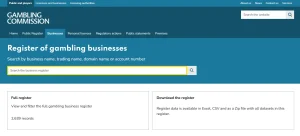
- Look up that company on the UKGC register.
- Confirm that the licence information matches the operator.
- Verify that the site’s claims align with the official register.
Check who is actually taking the bet
A game title and the company operating the casino are not necessarily the same thing. If you are looking at a Plinko casino game for real money, find the operator’s legal name in the site’s terms or licensing information. Then check that the licence belongs to that company and covers the gambling service being offered.
That detail matters because a brand name can be different from the legal entity behind it. A logo at the top of a page tells you little by itself. I learned to look past the front page and find the company named in the terms. It is less exciting than trying a game, but it answers the question that matters first.
The UKGC register is the place to check whether an operator is licensed. Match the legal company name, rather than relying on a badge or a sentence saying “licensed”. If the details are unclear, do not treat that uncertainty as a minor bit of website clutter. Pause before depositing.
“Real money” is not the same as a real licence
A site may let you open an account, place a bet or see a balance displayed in pounds. None of those things proves that it has permission to offer gambling to British customers. Likewise, calling a product a Plinko slot or a Plinko machine does not change the operator’s licensing obligations.
Online Casino Tournaments UK: Entry and Rules
This is where I used to get distracted. The interface looked familiar, so I assumed the protections would be familiar too. That is not a safe assumption. The licence belongs to the operator, not to the game name, and a game’s appearance cannot tell you whether the casino is operating under a UKGC licence.
For searches about a Plinko casino review in the UK, keep that distinction in view. A review might describe a site’s features, but the practical check is still the operator’s own licensing status. If you cannot connect the brand to a named licensed operator, you have not established that it is authorised to take your bet.
Before you put money in
I would check these points before making a deposit:
- Find the casino’s legal operator name in its terms and conditions.
- Look up that company on the UKGC register.
- Confirm that the licence information matches the operator, not just a similarly named brand.
- If the site’s claims and the register do not line up, do not proceed on the strength of the site’s own wording.
This is not a way to predict whether you will win. It is a way to establish whether the operator is licensed for the market it is serving. “Trusted” is an advertising word; the verifiable point is the licence.
Questions such as whether a Plinko casino is real, or whether you can withdraw real-money winnings, can blur together. The licence check answers a narrower question: whether the operator has the required UKGC authorisation for real-money gambling in England, Scotland and Wales. It does not tell you what any individual play will return, and it is not a promise about a particular withdrawal.
I would not deposit first and investigate later. Once money is in an account, it is easier to talk yourself into overlooking a mismatch. Check the operator before the first bet, not after something goes wrong. It takes a little patience. Better than guessing.
Free Play Without Treating It Like a Win
Free play can sound like a way to find out whether a game suits you without putting anything at risk. That may be useful for getting a feel for a format, but it does not turn a possible outcome into dependable money. I learned that distinction the expensive way: a promising result can feel like evidence that the next one will follow. It isn’t.
Casino games involve staking cash or chips on possible random outcomes, or combinations of them. A win is possible; a reliable return is a different thing altogether. Across casino games, the house has a predictable advantage over the long term, even though players can make short-term gains. Those two ideas sit side by side. A good run can happen, but it does not erase the longer-term edge.
Monopoly Live Casino in the UK: How It Works
That matters when you are looking to play Plinko for free or trying to understand a Plinko casino game before spending money. Treat a free session as a way to observe what you are doing, not as a forecast of what you would earn. A result on one occasion says little about what will happen on another. And if the experience feels exciting, that excitement is not a measure of whether the game is likely to pay.
I used to read a run of wins as a sign that I had found a pattern. Then I would raise my expectations and start treating the next result as something I had earned. That thinking made every loss feel like a temporary interruption rather than a possible outcome in its own right. It wasn’t a strategy. It was me trying to turn randomness into a promise.
Free play can still have a practical purpose. You can pay attention to whether you understand the choices in front of you and whether the pace feels comfortable. You can also notice your own reaction: do you keep going because you are curious, or because you want to recover a result that has already gone? That is useful information about your habits, not a prediction of future winnings.
Be careful with words such as “free,” “bonus” and “spins”. They describe an offer or a way of taking part; they do not mean that the outcome is a return you can count on. If you move from playing without money to staking cash, you are making a different decision. Set expectations accordingly, rather than assuming a session that went well without a stake will behave the same way once money is involved.
The same caution applies when someone talks about a Plinko payout as if it were a dependable feature. A possible win is not the same as a regular income, and no single result tells you what your next session will bring. I’ve had to remind myself of that after a lucky stretch, when confidence was doing more work than evidence. Short-term gains are possible. So are losses.
Attention: A promising result in a free play session is not a forecast of future winnings and does not erase the house’s long-term advantage.
If you choose to play, decide what you are comfortable spending before the excitement takes over, and stop when you reach that boundary. Do not borrow against a win that has not happened, and do not chase a loss in the hope that the next outcome will fix it. Free play may help you see how you respond to a game. It cannot show you a dependable path to profit.
No sure thing.
How to Read the UK Plinko Casino Landscape in 2026
A Plinko label tells you what a page is promoting; it does not tell you where the operator sits in the UK market. That distinction matters more than the wording on a banner. A specialist review describes the 2026 online casino landscape as having two parallel sides: UKGC-regulated operators and offshore platforms outside that system. The split is useful as a starting point, but the label “UK” on a page does not itself establish that an operator is licensed here.
The legal baseline is clearer. The Gambling (Licensing and Advertising) Act 2014 brought operators taking bets from people in Britain within a licensing requirement. In practical terms, a platform operating from abroad is not exempt simply because it is based elsewhere if it takes bets from British residents. Offshore casinos that accept UK players operate outside the UKGC framework; that is not the same as being part of the regulated UK market.
That difference is easy to miss when a site looks polished, uses familiar language or accepts people from Britain. I’ve learned not to treat any of those things as proof of regulatory status. A page can be aimed at UK readers without belonging to the UKGC system. The market position is the point.
Best RTP Casino Slots UK: What the Return Figure Means
What the distinction tells you
When you come across a Plinko casino aimed at UK players, separate two questions in your head. First, what is the site offering? Second, what regulatory system does the operator belong to? The name of a game or the country mentioned in a headline answers neither question by itself.
For a real-money casino serving customers in England, Scotland or Wales, the relevant baseline is a UKGC licence. A platform operating beyond that system should not be read as a UK-licensed casino just because it welcomes British customers. That is the practical meaning of “offshore” here: the operator may be accessible to UK players, yet remain outside UKGC oversight.
A neat-looking site can blur that line. So can promotional wording. “UK-friendly” might describe who the operator is willing to accept; it does not mean the operator is licensed in the UK. Small distinction. Big consequence.
That is also why the phrase “Plinko casino” is not enough to tell you how the experience works or what outcomes to expect. It is a category label used in a commercial setting, not a statement about the operator’s licence. If you are trying to understand how a Plinko casino works or how to win at one, keep those questions separate from the market-status check. A game description cannot establish that a platform is regulated, and a UK-facing page cannot turn an offshore operator into a UKGC licensee.
I would start with the operator’s actual status, not the site’s tone. Once you know whether it belongs to the regulated UKGC market or sits outside it, you can interpret the rest of the page with fewer assumptions.
Market Summary
- A Plinko label does not establish an operator’s regulatory status in the UK.
- UKGC-regulated operators and offshore platforms are two distinct categories.
- Being “UK-friendly” or accessible to British players is not the same as being licensed by the UKGC.
- The legal requirement for real-money gambling in Britain is a UKGC licence.
Casino Sites, Offshore Offers and the Small Print
An offer can look generous before you read the conditions attached to it. That is where I have made mistakes: I focused on the headline and treated the smaller print as a formality. It isn’t.
Some platforms that accept UK players operate outside the UKGC system. That distinction matters when you assess an offer: a site’s willingness to take UK customers does not, by itself, make it part of the UK-regulated market. “No deposit” means a bonus that does not require you to spend money to receive it, but it does not automatically mean you can withdraw any resulting balance without conditions.
The key term to understand is wagering. It describes how much you must stake against bonus funds before the offer’s withdrawal conditions are met. For instance, a £100 bonus with a 35x requirement would mean £3,500 in total bets. That example shows why the multiplier matters: the bonus amount alone tells you very little about how much play is required. Since 19 January 2026, UKGC rules cap wagering requirements on gambling incentives at 10x the bonus funds. A £20 bonus at that limit would mean £200 in stakes. Check which rules apply to the operator rather than assuming every offshore offer follows UKGC requirements.
Online Keno Casinos in the UK: Games, Odds & Picks
There is another important restriction on UKGC incentives: one offer cannot require you to gamble across different product types, such as casino games and sports betting, to unlock a reward. A promotion that bundles them together deserves close attention. The wording should make clear what you must do and what happens if you do not meet the conditions.
I also look for the less flashy details: whether a minimum deposit applies, which parts of an offer it applies to, and whether free-spin winnings have a cash cap. A specialist casino review describes these as terms that can affect offers, but the only safe approach is to read the specific promotion’s own rules before opting in. A cap can limit what you keep even after a winning spin.
For Plinko-related offers, the same discipline applies. Don’t let the game name distract you from the operator and the terms. “Bonus” is just a label. The conditions are the deal.
What “Best Plinko Slot” Should Mean Before You Choose
If you’re choosing a UK casino for Plinko in 2026, payout timing is one practical detail to check. Use these verdicts as a brief reference when considering how quickly you may receive a payout.
1. Chanze
Payout speed: 1-3 business days Chanze lists a payout speed of 1–3 business days. You can use that as a guide when considering how soon a payout may arrive.
2. EvoSpin
Payout speed: 1-3 business days EvoSpin lists a payout speed of 1–3 business days. You can factor that timing into your choice.
3. Zombillion
Payout speed: 1-3 business days Zombillion lists a payout speed of 1–3 business days. That gives you a stated timeframe to consider for payouts.
4. SpinFormula
Payout speed: 1-3 business days SpinFormula lists a payout speed of 1–3 business days. You can keep this stated timeframe in mind when reviewing the option.
5. Amunbet
Payout speed: 1-3 business days Amunbet lists a payout speed of 1–3 business days. This provides you with a stated estimate for payout timing.
6. x3bet
Payout speed: 1-3 business days x3bet lists a payout speed of 1–3 business days. You can consider this timeframe when deciding whether it suits your needs.
7. Revery Play
Payout speed: 1-3 business days Revery Play lists a payout speed of 1–3 business days. You have a stated payout timeframe to refer to.
8. WinBeast
Payout speed: 1-3 business days WinBeast lists a payout speed of 1–3 business days. You can use this estimate as one practical point of reference.
9. SlotoSport
Payout speed: 1-3 business days SlotoSport lists a payout speed of 1–3 business days. You can take this stated timing into account.
10. NightWin
Payout speed: 1-3 business days NightWin lists a payout speed of 1–3 business days. You can refer to this timeframe when considering payouts.
“Best” sounds like a verdict, but without a clear basis it is just a label. I used to treat a confident description as evidence that a game was somehow better for me. It wasn’t. A more useful approach is to ask what you can actually check about the game, and what matters to you before you play.
For a Plinko-style game, don’t assume the word “slot” tells you how it works or what it can return. Look for the game’s own information and read its stated rules and payout details, where those are provided. If something important is unclear, that is a reason to pause rather than fill in the gaps with a claim from an advert. “Best” is not a measurable quality on its own.
The other thing I had to get straight was the difference between a possible win and a reliable return. Casino games are generally designed to give the casino a predictable advantage over the long term, while still allowing players to have short-term gains. Those two things can both be true. A winning session does not prove that a game is favourable, and a losing session does not tell you what will happen next.
That’s the trade-off. No clever label removes it.
So when you compare games described as Plinko slots in the UK, focus on what is disclosed, whether you understand the rules, and whether the experience suits what you are looking for. Don’t treat a dramatic-looking outcome or a streak of wins as proof of future results. I learned that one the expensive way.
Deal or No Deal Casino UK: Slot Features and Play
The same applies to searches for the best Plinko casino in the UK: a game’s appeal and a casino’s suitability are separate questions. A ranking may make a choice look settled, but it cannot turn chance into certainty. I’d rather see a clear explanation than a grand promise. If the pitch leans heavily on “best”, ask what the word is based on. If there is no concrete answer, it is decoration.
Demo and Slot Searches: Keep the Claims in Check
A demo label sounds simple: try a game without treating the session as a real-money one. But the wording alone does not tell you what is available, how it works, or whether a particular Plinko-branded game exists. I’ve learned not to turn a label into a promise. Check what the page actually offers before assuming there is a playable demo.
The same caution applies when a game is described as a slot. That word may be used to describe a casino-game format, but it does not establish that a specific Plinko slot is available, or that a demo version exists. “Plinko slot demo” may sound like a neat package. It is still just a phrase until the game and its terms are clearly identified.
Where a casino game uses random-number selection, the selections are generated by a computer or other gaming equipment. That tells you something about how outcomes are produced; it does not tell you what the next result will be. Nor does seeing a demo label reveal whether a session follows the same conditions as a real-money game. Don’t fill in those blanks yourself.
I used to treat a demo button as a kind of preview with more meaning than it deserved. It may let you see a game in action, if that option is offered, but it cannot show you a dependable future result. A run of favourable outcomes is still only a run of outcomes. A poor one is no forecast either.
Fast Payout Online Casinos UK: How Keno Payouts Work
So read “demo” as a description to verify, not a feature to assume. Look for the actual game name, whether it can be opened without depositing, and any explanation of how the mode differs from real-money play. If the page is vague, the sensible conclusion is that you have not been given enough detail—not that the missing detail must be favourable.
Keep the claims small. A game may use computer-generated random selections; a search phrase or promotional label cannot prove more than that.
Deposits and Withdrawals: What the Payment Facts Actually Say
When you look at a Plinko casino’s payment information, it is tempting to treat a quick deposit as proof that a withdrawal will be just as quick. I used to make that leap. They are separate parts of moving money, so a smooth payment into an account does not tell you when money will come back out.
Open Banking and Faster Payments have reduced friction in transfers to and from online casinos. That is useful context, but it is not a promise about every casino with Plinko in the UK, or about a particular transaction. The payment route matters; so does the platform handling it. A familiar payment system does not, by itself, settle how quickly an operator completes a withdrawal.
There is also a difference between a general statement about platforms and a guarantee you can rely on. One specialist review reports that many platforms offer instant deposits and complete deposits and withdrawals within hours rather than days. That is a reported pattern, not a timetable for every site. I would read it as a broad indication of what some platforms claim or provide, not as a reason to assume a Plinko casino withdrawal in the UK will arrive within a set window.
Fastest Payout Online Casino UK: What Speed Means
Before depositing, I would check the cashier’s payment information for the methods available and the terms attached to withdrawals. Then I would look for wording that explains how the operator handles the process, rather than relying on a headline that says “fast” and leaves the important part fuzzy. If the details are unclear, that uncertainty is worth noticing before money goes in.
What is a Plinko casino, in payment terms? It is still an online casino account where the deposit and withdrawal process belongs to the platform, not to the game name. The label does not establish which payment methods are offered or how quickly a withdrawal will be completed. No shortcut there.
Crypto at Plinko Casinos: The Payment Options to Check
When I see a casino described as crypto-friendly, I now treat that as a payment claim, not a recommendation. A specialist review has described some alternative platforms as accepting Bitcoin, Ethereum and Litecoin alongside conventional cards and e-wallets. That is a description of some platforms, not a promise that any particular site supports all those options.
Live Casino Lightning Roulette in the UK: How It Works
The useful check is the cashier’s actual list of methods. A coin appearing in a promotional banner does not tell you whether it is available for deposits, withdrawals or both. Nor does a familiar cryptocurrency name tell you what conditions apply. Read the payment terms before sending funds, and make sure you understand how the platform handles the method you intend to use. No assumptions.
There is a UK-specific distinction worth keeping in view. UK-licensed casinos cannot accept credit cards for gambling, and online gambling here is legal only at licensed and regulated sites. Some alternative platforms operate outside the UKGC system; a crypto option does not change that position or make a platform UKGC-licensed. Payment choice and regulatory status are separate checks.
I would also avoid reading “crypto casino” as meaning that crypto is required. The platforms described in specialist coverage may offer conventional cards or e-wallets as well, but availability varies by operator. Check the site itself rather than relying on a general label, and do not treat a list of payment logos as proof that every method is currently usable.
The practical point is simple: verify the exact payment options and their terms, then consider the platform’s status separately. Crypto is a way to move funds where offered, not evidence that a Plinko game, a payout or a particular outcome is better. Keep those claims apart.
Material created by the team Prestige