

VIP status is a high-value customer arrangement, with incentives tied to spending or play frequency rather than simply a loyalty badge.
What a VIP Scheme Actually Means in the UK
“VIP” sounds like a badge you earn for being a regular. In online casinos, it usually means something more specific: a high value customer (HVC) arrangement in which an operator offers tailored incentives linked to how much a customer spends or how frequently they play. The label can vary, but the underlying idea is personal treatment connected to a customer’s gambling activity.
That distinction matters. A casino loyalty programme might be open to ordinary customers, while an HVC arrangement is aimed at people the operator considers high value. The word “exclusive” can make that sound like a perk first and a business decision second. It is both. I’ve learned not to treat the label as proof that an offer is generous, or that it suits me.
In the UK, there is also a regulatory framework around who can offer online casino gambling. The Gambling Commission regulates gambling activity, including online casinos, and is the sole regulator for commercial gambling in Great Britain. Remote gambling offered to consumers in Great Britain falls within its remit even when the operator’s key equipment is located elsewhere. Moving servers abroad does not move the operator outside that framework.
No wagering casino bonuses in the UK: terms explained
So when you see a VIP offer attached to a casino serving British customers, it is not simply a private club with its own rules. The operator remains subject to the UK regulatory system. A VIP label does not create a separate category of gambling or remove the usual regulatory responsibilities.
I used to read “VIP” as a sign that the casino had noticed me in a good way. Now I read it as a description of how the operator has chosen to treat a customer based on spending or frequency. That is less flattering, but more useful. It also helps separate the marketing language from the actual arrangement.
A casino VIP programme in the UK can therefore mean a tailored relationship between an operator and a customer whose play is considered high value. The details may differ from one casino to another, but the defining link is between personalised incentives and the customer’s spend or play frequency. The term alone tells you neither what the incentives are nor whether the programme is appropriate for you.
Cascading Slot Games UK: A Guide to Free Play
That is the baseline: a commercial arrangement, not a special status outside the rules. “VIP” is a label. The substance is the operator’s personalised treatment of a high value customer, within the same British regulatory setting that applies to online gambling more broadly.
How VIP Schemes Are Monitored—and Why the Numbers Fell
The sharpest change in high-value customer programmes was not a new tier or a different reward. It was a change in how operators were expected to decide who could be treated as a high-value customer, and how closely they needed to keep checking that decision. The Gambling Commission’s casework found that incentives could get in the way of recognising signs of harm. It also saw evidence that some programmes encouraged harmful play. That is a serious problem: a customer’s spending can look commercially attractive while their circumstances are becoming unsafe.
I used to take “VIP” as shorthand for being valued. It is also a label that can bring extra attention from a casino, so the question that matters is what the operator is monitoring and why. The Commission challenged the industry to address the risks, and the number of customers enrolled in VIP programmes has since fallen by 70%. A smaller roll is not, by itself, proof that monitoring is effective. But it does show how much participation changed after the challenge.
What responsible monitoring involves
Before offering a high-value customer incentives or special treatment, an operator must assess whether their spending is affordable and sustainable within their leisure budget. It must also consider whether there are signs of gambling-related harm or increased risk associated with vulnerability. Those are not box-ticking details to revisit only when something goes wrong; the operator needs to keep checking the customer over time.
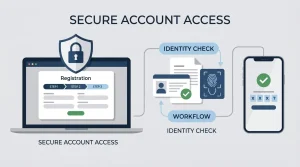
The assessment also depends on having current evidence about identity, occupation and source of funds. Information supplied by a customer needs to be verified, and checks for signs of harm must continue after admission to a programme. In practice, that means VIP status cannot sensibly be treated as a permanent badge earned through spending. Circumstances change. Monitoring has to keep pace.
Attention: VIP status cannot be treated as a permanent badge; operators must continuously monitor customers as circumstances and risks change over time.
There is an age safeguard, too. The industry protocol says customers under 25 must not be recruited to high-value customer programmes, while UK expectations also call for access to be restricted for people aged 18 to 24. The point is to limit exposure to targeted incentives where younger adults may face particular risks. A programme should be run consistently and transparently, with preventing gambling-related harm taking priority over commercial pressure.
Oversight is meant to sit above the team making day-to-day decisions. A senior executive or board member must be accountable for how the programme operates. Operators also need a full audit trail: what information was gathered, what decisions were made and how rewards were handled. Staff responsible for these programmes must not have pay or bonuses linked to an individual customer’s losses or spending. That separation matters. If staff benefit directly when one person spends more, welfare checks have an obvious conflict to overcome.
Reading the fall in participation
The Commission’s challenge was followed by a major reduction in the reported number of enrolled customers. One report by igamingbusiness.com compared figures across participating operators: it recorded 42,349 high-value customers among 22 operators before the policy change, while a later reporting period, April 2023 to March 2024, showed 1,616 across 18 operators. These are counts from different groups and periods, not a like-for-like census of every British casino.
The same reporting also found a steep fall when the figures were averaged per operator. The earlier operator average was 1,924.95 customers; the later one was 89.77, a reduction of 95%. That helps explain why the industry-wide change was not simply a matter of a few customers leaving. The scale of enrolment reported by those operators was far lower after the policy shift.
Casino Sign-Up Offers with No Wagering in the UK
Still, numbers alone do not tell you whether any particular customer was assessed properly, or whether a smaller programme is safer in practice. A low count could reflect stricter entry decisions, a change in how operators classify customers, or both. The safeguard is the process: documented checks before admission, continued review, clear accountability and decisions that do not bend to revenue targets.
There is a useful distinction here. A casino can still have a loyalty offer without treating a customer as high value. The more targeted the special treatment becomes, the more important the operator’s checks and records are. If the minimum expectations cannot be met, the Commission’s guidance is clear that the operator should not run a high-value incentive programme at all. No label is worth skipping the checks.
For anyone comparing online casinos that advertise VIP treatment, the monitoring behind the offer is less visible than the headline. I would not read a grand promise as evidence of careful oversight. The meaningful test is whether the operator assesses affordability, vulnerability and harm, keeps that assessment current, and can account for its decisions. Less glamour. More scrutiny.
How to Read “Best” VIP Casino Claims Without a Rankings List
“Best” is doing a lot of work in a casino loyalty advert. It can mean a generous-sounding offer, a named host, or simply that the operator has a programme at all. I wouldn’t treat the label as proof that one casino is better for you than another. The useful question is what sits behind the claim—and whether it is backed by anything more than polished wording.
There is no single measure or league table that ranks every UK casino loyalty programme; available market figures provide context rather than a definitive ranking.
There is no single measure in the available market figures that ranks every UK casino loyalty programme. Instead, the reported figures give a sense of how common these programmes are and how much gambling yield they represented for particular groups of operators. That is context, not a league table.
What prevalence does—and does not—tell you
A report by igamingbusiness.com said that 60% of responding operators had VIP programmes in 2024. The same report put the share at 55% in 2021 and 67% in 2020. Those figures describe the operators that responded; they do not establish that every casino offers the same arrangement, or that a programme is valuable simply because it exists.
That distinction matters when you see a “best VIP casino” claim. A programme’s presence tells you little about its terms, how status is assessed, or whether an offer suits your circumstances. Nor does a higher prevalence figure mean that players receive better treatment. It is a count of participating operators with a programme, not a customer satisfaction score.
I’ve learned not to let a confident label do the checking for me. “Exclusive” can sound like a verdict; it is only a description an operator chooses to use. The details matter more.
Read yield figures with their limits in view
The same domain, igamingbusiness.com, reported that VIP gross gambling yield for eight operators was £10.88 million in 2023–24, compared with £22.19 million in 2022–23—a reported decline of 51%. This is an aggregate for those eight operators and those periods. It is not a figure for every UK casino, and it does not tell you what any individual customer received.
Online Casino Reload Bonuses in the UK
GGY is also not a measure of player value or a return on an account. It describes gambling yield generated by operators, so it should not be read as evidence that a programme’s offers are generous, fair or worthwhile. A lower total does not automatically mean a worse programme, just as a higher total would not prove a better one. Different samples, periods and business results can all affect what an aggregate figure represents.
A separate igamingbusiness.com report said that VIP programmes generated approximately 3% of overall GGY for 12 operators. Keep the denominator in mind: this was an overall figure across that reported group, not a prediction about one casino or a promise about a player’s experience. It also cannot be directly compared with the yield total for eight operators as though both numbers described an identical sample.
A practical test for “best”
When a casino is presented as a leading choice, separate the claim from what you can actually verify. Is it making a specific statement about its programme, or leaning on broad words such as “premium” and “personalised”? Does the claim explain what it means, or leave you to fill in the blanks?
The market figures can help put a glossy pitch in perspective: programmes are not universal among responding operators, and reported VIP yield has varied substantially. But those figures cannot select a best casino for you. They are not a ranking, and they do not measure how suitable an offer is for your budget or play.
High-roller casino bonuses UK: terms and checks
I’d be cautious about treating a VIP casino list as an answer in itself. A list may organise choices, but a top position is not proof of better treatment. Check the actual terms and remember that a personal-sounding pitch is still a commercial offer. The headline is the easy bit. The evidence is harder.
VIP Bonuses: What the Rewards Can Depend On
A bonus attached to high-value-customer (HVC) treatment can sound like a straightforward extra: a credit, free spins or entry to a tournament. A specialist casino review describes those as possible rewards, while noting that the offers may be shaped by the games a player tends to choose. That is a description of one reported approach, not a promise that every casino offers the same rewards or that every player will receive them.
That distinction matters when an offer is described as a VIP casino bonus. The label tells you little on its own. A birthday reward, a welcome offer or a reload promotion may appear in promotional language, but the name does not establish that it is available to you, how it works or what you must do to qualify. I’ve learned not to treat a shiny label as the useful part. The terms are.
Game preference can affect the kind of incentive put in front of a player. Someone who mainly plays slots might be offered free spins, while someone who favours other casino games might see a different promotion or tournament invitation. Those are possible examples of tailoring, not a fixed menu. A “VIP slots bonus” is not automatically suitable just because it relates to a game you play; the actual offer and its conditions still matter.
Online Casinos with Daily Promotions in the UK
Before accepting anything, check which games count, when the promotion expires, whether the reward has conditions attached, and how participation affects your balance. Do not assume that an offer described as a bonus is withdrawable cash, or that free spins apply to every slot. If the terms are hard to find or unclear, pause rather than relying on a message from a personal contact or a promotional headline. Small print is still the offer.
There is also a more important test than whether the reward looks generous. In Great Britain, remote gambling operators serving consumers must hold a Gambling Commission licence. For an operator offering HVC incentives, the regulator’s guidance requires a full assessment before rewards or special treatment are offered, with checks repeated over time. The operator must consider whether spending is affordable and sustainable as leisure spending, and whether there are signs of gambling-related harm or vulnerability. It must also have current information about identity, occupation and source of funds.
So a bonus should not be treated as proof that a casino has judged your spending safe, or as a reason to spend more to keep an offer coming. The operator has responsibilities; you still get to decide whether the promotion suits you. If your play is becoming difficult to control, stepping away matters more than preserving access to a reward.
The same caution applies to phrases such as “exclusive” or “personalised”. Personalisation may mean the promotion reflects the games you play, but it does not tell you whether the offer is good value or appropriate for your budget. I’d read the actual terms before engaging, and ignore any pressure to act quickly. A bonus is an incentive to play, not free money. Short version: read first.
How Casino VIP Programmes Are Structured
When you’re considering a casino VIP program, payout timing is one practical detail to check alongside the program’s terms. Use the notes below as a reference, and confirm the current VIP benefits directly with each operator.
1. Chanze
Payout speed: 1-3 business days Chanze lists a payout speed of 1–3 business days. You can use this as a practical detail when considering its VIP offering.
2. EvoSpin
Payout speed: 1-3 business days EvoSpin lists a payout speed of 1–3 business days. You can factor that timing into your review of its VIP offering.
3. Zombillion
Payout speed: 1-3 business days Zombillion lists a payout speed of 1–3 business days. You can note this timing while checking its VIP terms.
4. SpinFormula
Payout speed: 1-3 business days SpinFormula lists a payout speed of 1–3 business days. You can consider this detail when reviewing its VIP offering.
5. Amunbet
Payout speed: 1-3 business days Amunbet lists a payout speed of 1–3 business days. You can keep this timing in mind when looking into its VIP program.
6. x3bet
Payout speed: 1-3 business days x3bet lists a payout speed of 1–3 business days. You can use that as one point of reference when checking its VIP terms.
7. Revery Play
Payout speed: 1-3 business days Revery Play lists a payout speed of 1–3 business days. You can consider this timing as part of your review of its VIP offering.
8. WinBeast
Payout speed: 1-3 business days WinBeast lists a payout speed of 1–3 business days. You can note this detail while assessing its VIP program.
9. SlotoSport
Payout speed: 1-3 business days SlotoSport lists a payout speed of 1–3 business days. You can factor this timing into your review of its VIP terms.
10. NightWin
Payout speed: 1-3 business days NightWin lists a payout speed of 1–3 business days. You can keep this detail in mind when considering its VIP offering.
A casino loyalty programme and a high value customer (HVC) arrangement can look similar from the outside, but they are not automatically the same thing. A general loyalty scheme may be open to ordinary customers; HVC status means a casino is treating someone as high value and offering tailored incentives or special treatment. That distinction matters. A sign-up to a rewards club is not, by itself, proof that you have been designated an HVC.
The entry point for a general loyalty programme is often built into account registration or a first deposit: a specialist review describes automatic enrolment at either stage as common. Some casinos instead ask customers to opt in. So, if you are checking whether you joined, look at the account terms or loyalty section rather than assuming that a deposit has enrolled you. The detail can vary between operators.
HVC access is a different decision. It should not be treated as an automatic perk unlocked simply by creating an account or accepting a promotion. Before a customer is made an HVC, the operator must establish that their spending is affordable and sustainable as leisure spending, assess signs of gambling harm or vulnerability, and hold current evidence about identity, occupation and source of funds. Checks must continue after entry, too.
Do
- Verify that spending is affordable and sustainable
- Assess signs of gambling harm or vulnerability
- Maintain current identity and source of funds data
Don’t
- Treat HVC access as an automatic perk
- Let commercial pressure outweigh customer welfare
- Ignore the need for continued monitoring after entry
That is the part promotional language tends to blur. “Invited” sounds like recognition; in practice, it should also mean the operator has assessed whether the arrangement is appropriate. If the checks cannot support that decision, the operator should not run the incentive arrangement for that customer. Commercial pressure is not meant to outweigh welfare.
There are also organisational controls behind the customer-facing offer. A licensee must assign responsibility for its HVC arrangements to a senior executive or board member, keep a full audit trail of information gathered and decisions made, and ensure staff rewards are not tied to an individual customer’s losses or spending. The programme is not just a private understanding between a player and a manager. It sits within the operator’s controls.
The UK guidance timeline is clear: a code of conduct for HVC incentives came into force in October 2020, and the Gambling Commission’s new guidance took effect on 31 October 2020. The guidance sets minimum expectations that operators must adopt and be able to evidence in their policies and practices. For customers, that makes the structure more than a question of how someone gets invited. It also concerns how the operator decides, records and reviews that access.
When you compare a casino’s general rewards club with an HVC arrangement, check which one the wording actually describes. A broad loyalty programme may enrol customers automatically or require a choice; HVC treatment requires a separate, welfare-led assessment. The labels can sit close together on a website. The responsibilities behind them do not.
VIP Status, Tiers and the Points That Move You Through Them
A VIP label can look like a clear measure of how much a casino values you. I used to read it that way: move up a tier, and surely the account must be getting better. But “status” is a label within a casino loyalty programme, not a promise that a particular level comes with a particular feature.
Online Casino with Bonus Crab UK: Reload Guide
A specialist review describes tier names such as silver, gold and platinum. Those names can make a ladder feel familiar, but the label alone tells you little about how progress is calculated. The useful detail is in the programme’s own terms: what activity counts, how points are awarded and what the casino says is required to reach the next level. Don’t assume that two casinos use the same rules just because they use the same tier names.
Points and progress may be linked to how much you wager or how often you play. That means the programme can reward activity, rather than simply marking how long you have held an account. It also means a points balance is not automatically the same thing as tier progress: check whether the casino explains both, and whether they are tracked separately.
I’d look for plain wording rather than relying on the shine of the tier badge. Does the programme say which games or kinds of play count? Does it explain when progress is reviewed? Can you see what happens to your status if your activity changes? If those details are hard to find, the label is doing more work than the rules.
There is a more important line beneath any points table. In Great Britain, a casino must assess whether spending is affordable and sustainable as part of a customer’s leisure spending before making them a high value customer (HVC). It must also consider signs of gambling-related harm or vulnerability, keep relevant identity, occupation and source-of-funds information up to date, and continue checking for harm. Points earned through play should not be mistaken for proof that further play is suitable.
UK casino sign-up bonuses: how to assess an offer
That is why I wouldn’t chase a higher tier just because a progress bar is close to moving. Wagering more or playing more often may affect points or tier progress, but a label is not a reliable reason to increase either. If the programme makes status look like a target, pause and read the actual conditions instead.
A status page should help you understand the rules, not nudge you into guessing. Check the terms for the way points and progress are counted, and treat the tier name as a description—not a guarantee. Clear enough.
High Rollers and VIP Players: What the Thresholds Can Mean
“High roller” sounds like a neat category, as if a casino draws a line and everyone above it gets the same treatment. In practice, the label can point to a spending profile rather than a published entry rule. A specialist casino review puts deposits for joining an online casino VIP programme in the £10,000 range. That is one review’s account, not a UK-wide threshold or a promise that depositing that amount will earn you an invitation.
The same kind of specialist review describes regular four- or five-figure deposits as typical of the players such programmes seek to attract. It also says an account manager may get in touch with an offer. May is doing real work there: contact is possible, not guaranteed, and the review does not establish a universal qualification test. A casino for high rollers could assess activity in its own way, so a deposit figure alone cannot tell you whether you will be treated as a VIP.
Some programmes use points, but points are only one way activity may be tracked. Regular deposits and play can form part of the picture; neither should be mistaken for a safe target to chase. I have learned the hard way that a label such as “exclusive” can make ordinary spending feel like a step towards something. It is still your money leaving your account.
No status is worth stretching your budget for. A high-value-customer programme should not be treated as a status you can buy by increasing your stakes or frequency.
There is also a more important distinction in the UK: an invitation is not a licence to ignore affordability or risk. Before a customer is made a high value customer, the operator must establish that spending is affordable and sustainable within their leisure budget, assess signs of gambling harm or vulnerability, and hold current identity, occupation and source-of-funds information. Checks must continue after entry, too. Commercial pressure must not outweigh customer welfare.
So, if you are wondering how to become a VIP casino player, do not read a deposit estimate as an instruction. A high-value-customer programme should not be treated as a status you can buy by increasing your stakes or frequency. The operator has responsibilities before offering special treatment, and those responsibilities remain even if an account manager makes contact.
If a casino’s wording makes a large deposit sound like a reliable route into a VIP players’ club, slow down and read the actual terms. An account manager’s message may be an invitation to discuss an offer; it does not establish that the offer suits your finances, or that you have to accept it. No status is worth stretching your budget for.
Crypto VIP Casino Searches: What the Verified Information Can—and Can’t—Tell You
A casino described as “crypto VIP” combines two ideas that are easy to blur: a payment method and a loyalty arrangement. One does not establish the other. A crypto option alone tells you nothing about how a casino loyalty programme works, who can join it or what it offers.
I’d separate the claims before weighing them. First, is the operator licensed to serve customers in Great Britain? Remote gambling operators serving the British market must hold a Gambling Commission licence, wherever their key equipment is based. Then look at the loyalty arrangement on its own terms. A crypto label is not a substitute for either check.
Online Casino Welcome Bonuses in the UK: What to Check
Casino loyalty programmes can take different forms: automatic enrolment in a rewards club, points earned through play, or cashback set at a fixed rate on losses. Those formats describe how loyalty is organised; they do not establish that a programme is crypto-specific. Nor does an app label tell you whether loyalty is automatic or based on points. Read the actual programme terms rather than treating a prominent “VIP” badge as an explanation.
“Top” is another word I’d handle carefully. A list of leading VIP casinos only helps if it explains what is being compared and gives you a sound basis for judging each entry. A list that simply pairs “crypto” with “VIP” can make two unrelated features look like one tested package. That is marketing shorthand, not a useful comparison.
For a fair comparison, separate the questions: whether the operator is licensed for the British market, what loyalty format it uses, and whether the terms explain how participation works. Keep the payment method as its own question. Don’t assume a crypto deposit earns points, changes status or unlocks a particular programme unless the operator’s terms say so.
I’m wary of labels that do the explaining for you. “Exclusive” can sound like a reason to sign up, but it is not a description of the rules. With a crypto VIP casino, the practical detail is still the programme’s stated format and terms—not the combination of two attractive words. No shortcut there.
High-Roller Offers and the Personal Treatment Behind Them
The word “exclusive” can make an offer sound like a private club. In practice, it may refer to a bundle of services and promotions attached to a casino loyalty programme, rather than a promise that every high value customer (HVC) receives the same treatment.
A specialist casino review describes a package that can include a personal VIP manager, faster payouts, higher deposit limits, gifts, weekly rewards and invitations to events, alongside exclusive bonuses and promotions. That is a description of possible features, not a standard package across UK casinos. The wording matters: “personal support” could mean having a named contact, while an event invitation is a different kind of perk altogether. Neither tells you by itself what the terms of an offer are.
Exclusive No Deposit Casino Bonus UK: Terms Explained
I used to read a longer list of perks as proof that a programme was generous. That was the wrong shortcut. A personal manager, for instance, is a contact point; it does not make an offer suitable for you or remove the need to understand its conditions. Faster payouts and higher deposit limits may sound useful, but they are not automatically a reason to deposit more or play longer.
There is also a boundary around how UK operators can offer this treatment. Before making someone an HVC and offering incentives or special treatment, a licensee must assess whether their spending is affordable and sustainable as leisure spending, check for signs of gambling-related harm or vulnerability, and have current evidence about identity, occupation and source of funds. Those checks must continue; welfare cannot take second place to commercial pressure. An appealing offer should not be the thing that decides whether those safeguards apply.
If you are comparing personalised offers, separate the human contact from the financial terms. Ask what the manager can actually help with, what conditions attach to a promotion, and whether a gift or event invitation is being presented as a reason to keep spending. Those are different questions from whether a casino loyalty programme has an impressive-looking menu of benefits.
A “VIP” label can dress ordinary customer service in grand language. Sometimes there may be tangible extras; sometimes the main difference is more direct contact. I would judge the offer on its stated terms, not the title attached to it. Less glamour, more clarity.
VIP Casino Rewards: Points, Perks and Redemption
A rewards menu can look generous until you work out what you can actually use. Specialist reviews describe loyalty rewards ranging from bonus funds and free spins to exclusive promotions, quicker withdrawals, personal customer support, gifts and event invitations. That is a list of possibilities, not a promise that one casino offers them all.
Casino Bonuses: Free Spins and Welcome Offers
Points are another matter. A specialist review reports that some casino loyalty programmes let players exchange points for cash, bonuses, free spins or other rewards, with the available choices depending on the casino. I would check the redemption rules before treating a points balance as money. A number on screen is only useful if you know what it can be exchanged for and how the casino lets you do it.
The details to look for are practical: which rewards appear in the redemption menu, whether points can be used for more than one type of reward, and what conditions apply to each choice. If the information is hard to find, ask customer support to explain it in plain terms before you build a balance. No guesswork.
Weekly or monthly rewards may also be mentioned in promotional material, but the label alone tells you little about what is included or how it is claimed. Read the terms attached to the offer, not just the headline. A reward that suits one player may be of no use to another; I’d rather know the exchange options than be impressed by a long perks list.
Keep the basics in view, too: a reward does not change the fact that gambling involves risk. Points, gifts and bonus funds are not a reason to spend more than you can afford. Treat them as extras, not as a return you can count on.
Do UK casinos offer loyalty schemes beyond welcome bonuses?
Yes. Casinos may offer automatic rewards clubs, points programmes or cashback, with rewards linked to your play.
What types of rewards can I earn from a loyalty program?
You may earn bonus funds, free spins, exclusive promotions, faster withdrawals or personalised support. Some programmes also offer gifts or event invitations.
Can I redeem loyalty points for real money?
Yes, some casinos let you redeem points for cash; others offer bonuses, free spins or different rewards.
Can loyalty points have real value?
Yes, if your casino lets you exchange them for cash or other rewards. The available redemption options vary by programme.
Do I need to spend a lot to benefit from a loyalty program?
No. Many casinos enrol players in loyalty programmes automatically, while VIP schemes are aimed at customers with high spending or frequent play.
What is a VIP Program?
A VIP programme is a casino arrangement offering tailored incentives to customers based on high spending or frequent play. It may include bonuses, a personal manager, faster payouts or other rewards.
Material created by the team Prestige